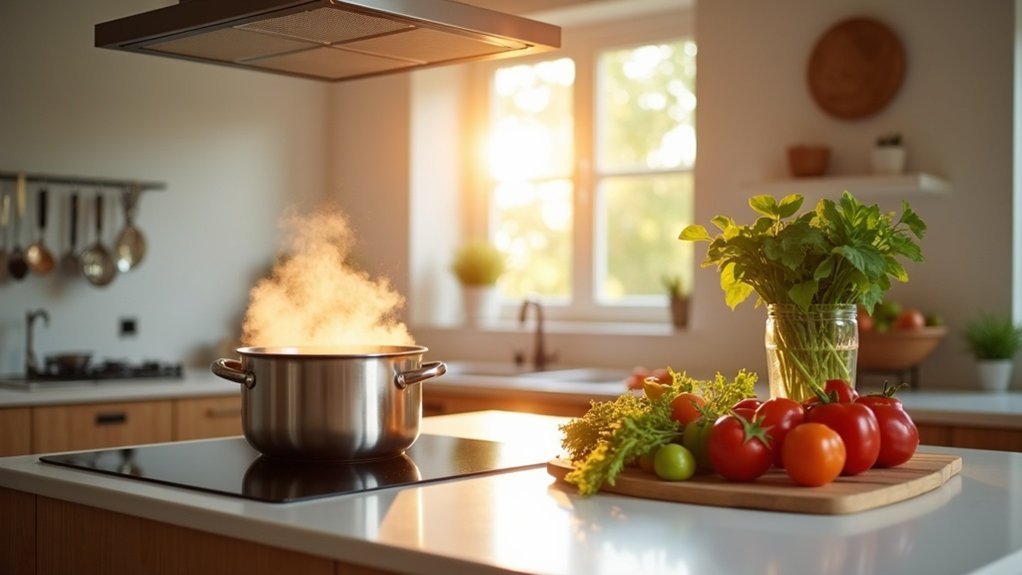
When preparing meals indoors safely in a survival or prepping scenario, consider methods such as butane stoves, alcohol burners, and canned heat. Butane stoves can deliver high heat and require proper ventilation to ensure safety. Alcohol burners are compact and stable, making them ideal for small meals in tight quarters. Canned heat burns cleanly and is excellent for emergency situations when conventional cooking methods are unavailable. Additionally, candle lanterns can provide consistent heat with minimal smoke, making them a suitable option for stealthy cooking. Built-in appliances like gas or wood stoves can also be effective in a pinch, especially if you have a reliable fuel source. Explore these methods to determine which aligns best with your survival cooking needs.
Key Takeaways
- Butane stoves are an excellent option for survivalists, offering high heat output for cooking indoors. Ensure they are positioned away from flammable materials and that there is adequate ventilation to prevent any buildup of harmful gases.
- Alcohol burners are a safer choice for indoor use in prepping scenarios. They provide flexible fuel options and should be placed on stable surfaces to avoid spills, making them ideal for emergency cooking.
- Canned heat (Sterno) is a reliable resource for indoor cooking during emergencies or power outages. It burns cleanly with minimal smoke, making it a great addition to your survival gear.
- Candle lanterns not only offer even heat distribution but also improve air quality, making them suitable for prolonged indoor use when properly secured. They can serve dual purposes for light and heat in survival situations.
- Built-in home cooking appliances like gas stoves and wood stoves are dependable for everyday cooking, but be cautious and avoid using gas fireplaces for cooking due to the toxic risks involved.
Butane Stoves: Power and Safety for Indoor Cooking
When you’re preparing for emergency situations or looking for a reliable cooking option indoors, butane stoves can be an excellent choice for survivalists and preppers. They deliver up to 10,000 BTU, performing on par with traditional stove tops, making them a powerful tool in your preparedness arsenal.
To ensure safe indoor cooking during critical times, it’s vital to follow essential safety precautions. Keep your stove away from flammable materials, and always have a fire extinguisher nearby as part of your emergency kit.
Installing battery-operated smoke and carbon monoxide alarms adds another layer of protection in case of power outages. Additionally, cooking near a cracked window helps dissipate any fumes, improving indoor air quality—crucial during extended periods of indoor confinement.
With proper care and attention, butane stoves can provide an efficient and safe cooking experience, making them a valuable asset for any prepper’s home.
Alcohol Burners: Compact Solutions for Small Meals
When utilizing alcohol burners for cooking in a survival situation, you’ll value the range of fuel options available, including denatured alcohol and isopropyl alcohol, which offer flexibility based on what you have on hand.
Ensure that your burner is set up on a stable surface to ensure cooking stability and prevent spills, which could lead to dangerous situations.
While alcohol burners are generally safer for indoor use compared to propane stoves, it’s crucial to adhere to basic safety measures to minimize risks and ensure a secure cooking environment in any prepping scenario.
Fuel Options and Availability
While many may consider larger cooking appliances for meal preparation, alcohol burners present a compact and efficient solution for indoor cooking, particularly in survival and prepping scenarios where space is at a premium.
Here’s why they’re a valuable addition to your cooking plan:
- Fuel Options: You can utilize denatured alcohol or isopropyl alcohol, which are readily available and effective.
- Cost-Effective: Common fuels typically cost around $3 or less per can, making them an economical choice for preppers.
- Portability: Their lightweight and compact design makes them ideal for bugout bags or emergency kits, ensuring you have a reliable cooking method on the go.
- Fewer Fumes: Alcohol burners emit fewer fumes compared to propane, making them safer for indoor use during extended emergencies.
Cooking Stability Considerations
To ensure safe and effective cooking with alcohol burners in survival situations, prioritizing stability is crucial. These portable cookers are best utilized on a flat, solid surface to prevent spills and potential accidents, especially when resources may be limited.
When setting up your burner, verify that its base is secure and stable; any wobbling can lead to hazardous flare-ups. Avoid adding fuel to hot burners, as this significantly increases the risk of fire.
With various fuel options available, you can find a suitable source, but always prioritize safety first. By maintaining a stable cooking setup, you can prepare quick meals without compromising your safety, whether you’re indoors or in the field during a survival scenario.
Indoor Safety Measures
Maintaining stability is only the first step in ensuring safe indoor cooking with alcohol burners, especially in a survival or prepping scenario.
Follow these essential safety measures:
- Ensure Ventilation: Always cook in a well-ventilated area to minimize fume buildup. This is crucial for maintaining air quality during emergencies.
- Use a Stable Surface: Set up your burner on a secure, flat surface to prevent spills, which can be hazardous in a survival situation.
- Select Appropriate Fuel: Choose denatured or isopropyl alcohol for safe, efficient burning. Stocking up on these fuels can be part of your preparedness plan.
- Avoid Refueling Hot Burners: Never add fuel to a burner that’s already lit to prevent dangerous flare-ups. This is particularly important when conserving resources during a crisis.
Canned Heat: A Warm Option for Keeping Food Hot
When you need a dependable method to keep food warm indoors, canned heat presents a practical solution that’s both efficient and safe for survival situations. Commonly referred to as Sterno, this portable fuel source contains a gel-like alcohol that burns cleanly, producing minimal smoke.
It’s crucial to place it on a stable surface to prevent spills and accidents, as the flames can be easily knocked over. Canned heat is particularly useful during emergencies or power outages, offering consistent warmth when traditional heating methods are unavailable.
Always ensure proper ventilation when using it indoors to help dissipate fumes and maintain a safe environment while you enjoy your warm meals. This knowledge is essential for any prepper looking to enhance their self-sufficiency in challenging situations.
Candle Lanterns: Safe Flame Options for Cooking
Candle lanterns present a practical and safe option for cooking in survival situations, particularly when conventional methods may be hazardous. They effectively contain flames, allowing for stable heat.
Here are essential considerations:
- Consistent Cooking Temperatures: Candle lanterns provide reliable and even heat distribution, crucial for effective meal preparation in emergency scenarios.
- Reduced Soot and Smoke: Unlike traditional cooking methods, they contribute to better air quality, making them suitable for prolonged use indoors or in confined spaces.
- Stable Surfaces: Ensure you utilize heat-resistant surfaces to prevent any risk of fire or accidents during cooking.
- Grouping for Efficiency: While clustering lanterns can increase warmth, it’s vital to ensure they’re securely positioned to prevent tipping and maintain safety.
In a survival context, being able to cook safely and efficiently can be a game-changer.
Oil Lanterns: Dual-Purpose Light and Heat Sources
While candle lanterns can be useful for controlled cooking, oil lanterns provide a more adaptable solution as they function not only as reliable light sources but also as effective heat generators. When utilizing oil lanterns indoors for survival situations, adhere to the following guidelines to ensure safe cooking:
| Aspect | Recommendation | Purpose |
|---|---|---|
| Oil Type | Paraffin Lamp Oil | Low odor, maintains better air quality for long-term use |
| Wick Height | Adjust for optimal burn | Minimizes smoke and discomfort, enhancing efficiency in critical situations |
| Surface Stability | Use stable, non-flammable surfaces | Prevents tipping and accidents, ensuring safety during emergencies |
Built-in Home Cooking: Utilizing Existing Appliances Safely
In an emergency, your home’s existing appliances can be invaluable for safe indoor cooking. Here’s how to utilize them effectively for survival situations:
- Gas Stove Tops: If you have natural gas access, these can be a reliable option for cooking meals quickly and efficiently.
- Wood-Burning Fireplaces: Enhance your fireplace with grill grates or pots designed for cooking to turn it into a multi-functional tool for heat and food preparation.
- Wood Stoves: Not only do they provide warmth, but wood stoves can also serve as dependable cooking options, especially during prolonged power outages.
- Gas Fireplaces: It’s best to avoid using these for cooking due to the risk of toxic fumes and grease accumulation, which can pose safety hazards.
Always be aware of smoke visibility to minimize detection during emergencies.
Be mindful of smoke visibility to avoid detection during emergencies and ensure your safety.
Make informed choices for the safety and efficiency of your cooking methods.
Prioritize your survival by knowing how to maximize the use of your home’s appliances in a crisis.