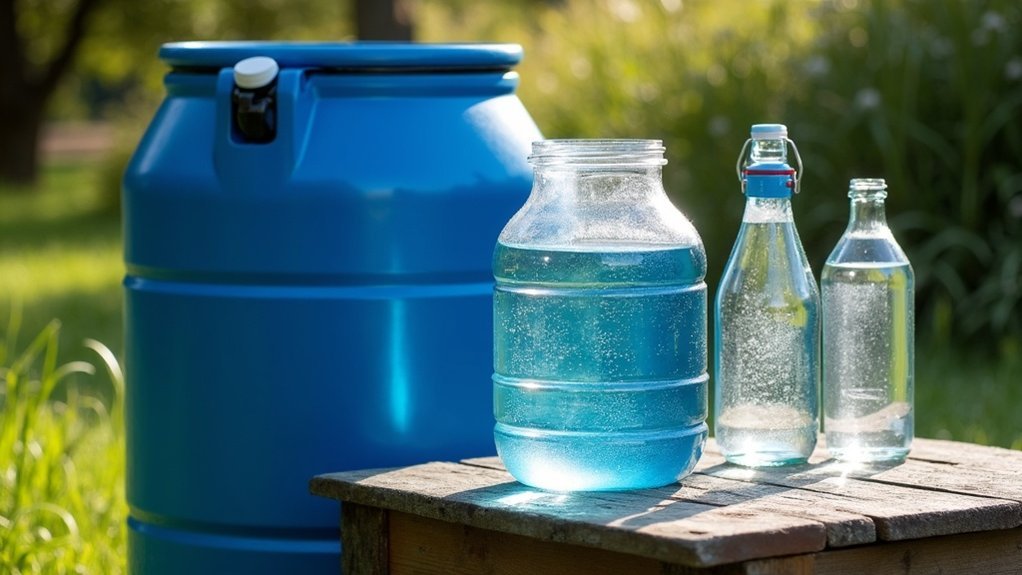
For effective water storage in a survival or prepping context, it’s essential to select a variety of container sizes tailored to your specific needs. Small containers (1-3 gallons) are ideal for daily hydration and easy transport, making them perfect for bug-out bags or emergency kits. Medium-sized tanks (55 gallons) are suitable for families or small groups, providing a robust supply for short-term situations. For greater preparedness, larger tanks (500-5,000 liters) are critical for long-term sustenance and emergency scenarios. Evaluate your household’s consumption patterns and potential survival situations to make strategic choices. Delve deeper into effective strategies for selecting and managing your water storage to ensure you’re always ready for any eventuality.
Key Takeaways
- Small containers (1-3 gallons) are essential for daily hydration and emergency preparedness, thanks to their lightweight and compact design that makes them easy to transport.
- Large tanks (500 to 5,000 liters) are crucial for sustainable living and prepping, offering ample water supply for a family over several days in case of unexpected events.
- Specialized emergency containers, such as 20-liter portable units and 55-gallon barrels, are specifically designed for long-term storage and secure sealing, making them ideal for survival situations.
- A strategic combination of small and large containers ensures a balance between convenience for daily use and ample capacity for emergencies or extended needs.
- Always choose BPA-free, food-grade materials for all your containers to guarantee that water remains safe and uncontaminated during storage, which is vital for survival preparedness.
Understanding Water Storage Needs
How do you determine your household’s water storage needs for survival and prepping? Start by evaluating your daily water requirements. For a family of four, you might need approximately 32 liters daily for essential activities, translating to at least one gallon (3.8 liters) per person per day.
In preparation for emergencies, aim to store a minimum of 45 liters per person for at least three days. Assess the available space for various water storage containers; your options could range from compact 5-liter jugs to large 1000-liter tanks.
Take into account your household’s specific water usage, peak demand times, and any potential scenarios you may face to select the appropriate container sizes. This ensures that you can effectively meet both your daily hydration needs and be well-prepared for emergencies.
Assessing Household Water Consumption
When assessing your household water consumption for survival preparedness, it’s crucial to monitor your daily usage, which typically averages around 70 gallons per person.
The size of your family directly affects total water consumption, as larger groups will naturally need more water for drinking, cooking, and hygiene.
Additionally, be mindful of seasonal changes that may require increased water for irrigation or other survival-related needs.
Planning for these factors can help ensure your household is equipped to handle emergencies and maintain self-sufficiency.
Daily Water Usage
Daily water usage can vary significantly among households, but on average, you can expect about 70 gallons per person each day. For a family of four, that totals around 280 gallons; however, water-efficient homes might reduce this to about 200 gallons.
Your daily consumption includes essential activities such as showering, laundry, cooking, and toilet flushing, which are critical to maintain during emergencies.
As a prepper, it’s crucial to track your water usage over a week to establish a baseline for your storage needs. Be sure to account for additional water required for plants and pets as well.
To ensure you’re prepared for any scenario, invest in a reliable water storage tank or appropriate containers for emergency use. Regular maintenance is essential to preserve water quality, ensuring that you have safe drinking water when you need it most.
Family Size Impact
Understanding the impact of family size on water consumption is crucial for effective emergency preparedness and storage planning. A family of four typically requires around 280 gallons daily, underscoring the importance of having adequate containers for long-term storage. Evaluating your household’s water usage can help determine an appropriate storage size to ensure you are ready for any situation.
| Family Size | Daily Water Usage (Gallons) |
|---|---|
| 2 | 200 |
| 4 | 280 |
| 6 | 420 |
| Emergency (per person) | 1 gallon/day |
In preparing for emergencies, it is recommended to store at least 45 gallons per person for a minimum of three days. Tracking your water usage patterns is essential to avoid shortages during peak consumption times and to ensure your family is adequately supplied during any crisis.
Seasonal Variations Consideration
As outdoor activities increase during the warmer months, it’s crucial for survivalists to be mindful of their household’s water consumption, which can rise significantly.
A family of four may typically use about 32 liters daily, but this can escalate to over 50 liters with the added demands of irrigation and cooling.
In colder months, while water usage tends to decrease, it remains vital to maintain sufficient storage for heating, cleaning, and other essential survival needs.
To optimize your water storage strategy, track your water usage weekly across seasons. This will provide valuable insights into your consumption patterns, enabling you to select the appropriate sizes for your containers and tanks.
Being prepared for peak usage times ensures you have enough water on hand to avoid shortages during critical moments.
Comparing Small Containers for Portability
When considering small containers for water storage in survival situations, their lightweight design and compact size are crucial for portability.
Options like 1- to 3-gallon jugs or 5-liter containers strike a balance between convenience and adequate capacity for daily hydration needs.
These features ensure easy transport and quick access to water, especially during emergencies or when storage space is at a premium.
Being prepared with effective water storage solutions is essential for any prepper’s survival plan.
Benefits of Small Containers
Small containers, such as 1 to 3-gallon jugs, provide crucial advantages for portability, making them essential for both daily hydration and emergency preparedness.
Here are the key benefits for survivalists:
- Lightweight and easy to carry – These containers can be transported effortlessly during outdoor excursions or while bugging out.
- Flexible access – Small containers easily fit into bug-out bags, vehicle trunks, or storage spaces, ensuring you’re always prepared.
- Secure lids – Tight-sealing lids prevent leaks and contamination, ensuring the water remains safe and of high quality during storage.
- Regular rotation – Their manageable size encourages regular use and rotation, helping to maintain water freshness and readiness for emergencies.
Incorporating small containers into your survival strategy enhances your preparedness and ensures that you always have access to safe drinking water when it matters most.
Ideal Uses for Portability
When considering portable water storage options for survival and prepping, it’s crucial to evaluate how different container sizes can enhance your readiness for various scenarios. Small containers, like 5-liter jugs, provide a practical balance between capacity and portability. Their lightweight design makes them an excellent choice for hydration during emergencies or outdoor survival activities. You can conveniently stow them in backpacks, bug-out bags, or vehicles, ensuring you’re equipped for any situation that may arise.
| Container Size | Ideal Use | Key Benefit |
|---|---|---|
| 1-2 liters | Daily hydration needs | Extremely portable |
| 3-5 liters | Short-term excursions | Versatile and adaptable storage |
| 5-liter jugs | Family preparedness | Ample capacity for groups |
Evaluating Medium-Sized Tanks for Families
As you explore options for water storage in your survival or prepping strategy, medium-sized tanks ranging from 200 to 500 liters stand out as effective solutions for families of four. These tanks ensure a dependable water supply for daily activities, emergency situations, and longer-term preparedness.
Here are four essential factors to consider:
- Daily Water Use: A 200-liter tank can support basic needs for approximately six days, making it suitable for short-term scenarios.
- Peak Demand: Tanks between 300-400 liters provide a safety buffer during times of high water usage, crucial during emergencies or unexpected events.
- Well Output: Confirm that your chosen tank aligns with your well’s capacity to ensure a sustainable water source.
- Plumbing Systems: Medium-sized tanks can be easily integrated into your existing plumbing systems, maintaining consistent water pressure and safeguarding your well pump from strain, which is vital for long-term resilience.
Large Tanks for High Water Demand
For survivalists and preppers facing high water demand, large tanks ranging from 500 to 5,000 liters are essential for sustainable living.
A 1,000-liter tank can support a family of four for several days, considering an average daily usage of 32 liters per person.
In agricultural scenarios, tanks exceeding 2,000 liters are crucial, ensuring adequate water supply for livestock and irrigation during crises.
The flexibility of installing large tanks either above ground or underground allows for optimal use of space, with underground options providing critical space-saving advantages.
Choosing durable materials like high-density polyethylene ensures these tanks withstand environmental stresses, making them a reliable investment for long-term water storage in preparation for emergencies and self-sufficiency.
Specialized Containers for Emergency Preparedness
Large tanks are excellent for long-term water storage, but in emergency situations, specialized containers are crucial for ensuring access to safe drinking water.
For effective emergency preparedness, consider the following options:
- 20-liter portable containers for easy transport and quick access.
- Collapsible bladder bags that provide flexible storage solutions, perfect for tight spaces.
- 55-gallon barrels engineered for long-term storage with secure, leak-proof seals.
- BPA-free, food-grade materials to ensure the water remains safe for your family during emergencies.
It’s recommended to store at least one gallon of water per person per day to ensure an adequate supply during a crisis.
Additionally, larger tanks can provide access to various water sources when needed, enhancing your overall preparedness.
Being proactive in your water storage can make a significant difference in survival situations.
Factors Influencing Container Selection
When selecting containers for water storage in the context of survivalism and prepping, several critical factors must be evaluated to ensure that they meet your household’s specific preparedness needs.
First, assess your household size; typically, a small family may require 20-liter containers, while larger households or those preparing for extended emergencies might necessitate 200-liter drums or even 500-liter tanks to ensure an adequate water supply.
Emergency preparedness guidelines recommend storing at least one gallon (3.8 liters) of water per person per day, so it’s essential to calculate your potential needs based on the number of individuals in your household.
Additionally, evaluate the available storage space in your home or designated prepping area and consider the ease of access for refilling during emergencies.
Smaller containers can provide portability, allowing for easy transport in case of an evacuation, while larger tanks can store substantial volumes for long-term survival.
A strategic mix of small and large containers can effectively balance convenience with efficiency, making them an essential component of your water storage strategy in preparedness planning.
Best Practices for Water Storage Management
To effectively manage your water storage in the context of survivalism and prepping, implementing best practices is essential for ensuring both safety and accessibility during emergencies.
Follow these guidelines to optimize your water storage:
- Choose the right size container: Use small tanks (1-3 gallons) for immediate, short-term needs and larger barrels (55 gallons) for long-term storage to ensure a sufficient water supply during critical times.
- Store water in BPA-free, food-grade materials: This prevents contamination and ensures that your stored water remains safe for consumption when you need it most.
- Rotate your stored water every 6 to 12 months: Using a FIFO (First In, First Out) method helps maintain freshness and prevents bacterial growth, which is crucial for your survival supplies.
- Keep containers in cool, dark places: This minimizes algae growth and degradation, ensuring that your water remains potable and ready for use in emergencies.
These steps will help you manage your water resources effectively, ensuring that you’re prepared for any situation that may arise.