Community groups such as CERT, local health departments, and non-profit organizations play essential roles in disaster preparedness within the survivalism and prepping community. They offer crucial training on emergency response, resources for medical support, and education focused on vital survival skills. Faith-based organizations provide emotional support while mobilizing volunteers to assist those affected by crises. Collaborating with these groups strengthens community resilience, ensuring that everyone has access to critical information and resources necessary for effective preparedness. If you’re keen on enhancing your survival skills, there’s much more to explore about how these organizations work together to promote a culture of readiness and self-sufficiency.
Key Takeaways
- Community Emergency Response Teams (CERT) offer training in essential disaster response skills to bolster community preparedness for various survival scenarios.
- Local health departments ensure access to medical supplies and provide crucial public health guidance during emergencies, reinforcing the importance of readiness.
- Non-profit organizations facilitate workshops focused on survival skills and assist vulnerable populations in developing effective preparedness plans.
- Faith-based organizations mobilize resources and volunteers to provide emotional support and distribute essential supplies during crises, fostering a sense of community resilience.
- Medical Reserve Corps (MRC) concentrates on public health emergencies, delivering medical support and training to enhance community readiness for any situation.
Importance of Community Groups in Disaster Preparedness
Community groups are vital components of survivalism and prepping, providing essential education and resources that empower individuals and families to become self-reliant in the face of disasters.
Organizations like the Community Emergency Response Team (CERT) offer training in critical disaster response skills, equipping you with the knowledge to effectively assist during emergencies.
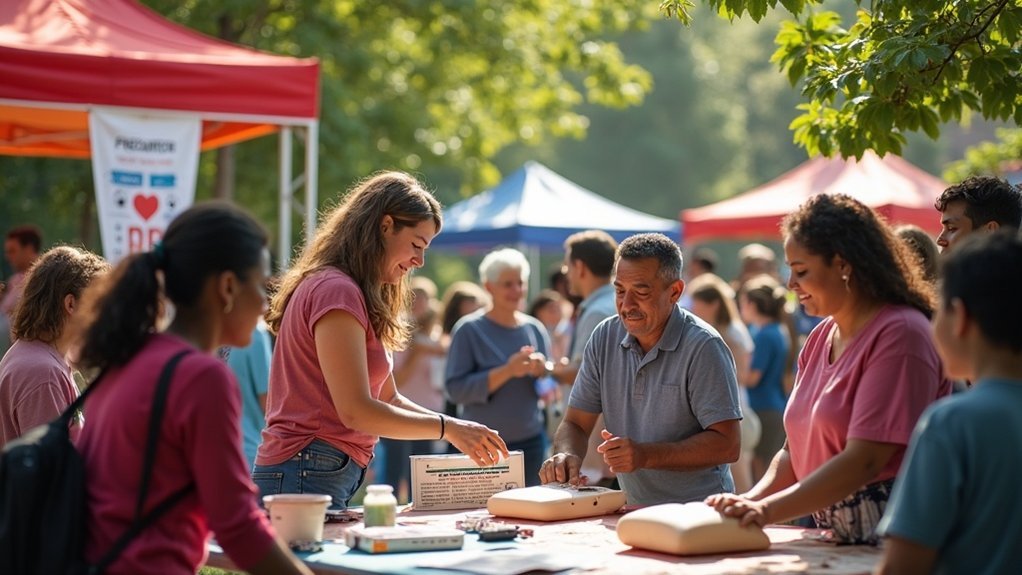
Community Emergency Response Team (CERT) training empowers individuals with essential skills for effective disaster response and emergency assistance.
Local non-profits and faith-based groups play a key role in reaching vulnerable populations, ensuring that everyone has access to vital information and support in times of crisis.
Furthermore, initiatives like the National Neighborhood Watch foster collaboration between citizens and law enforcement, encouraging proactive safety measures and community vigilance.
Role of Local Health Departments
Local health departments play a crucial role in survivalism and prepping by coordinating emergency resources and offering essential public health guidance during disasters.
They ensure that communities are equipped with necessary medical supplies and information, which is vital for effective survival strategies.
Emergency Resource Coordination
Effective emergency resource coordination is crucial for survivalists and preppers, particularly in times of crisis. Health departments play a vital role in this coordination by providing guidance on public health protocols and ensuring that essential medical supplies are accessible during emergencies.
In local emergencies, these departments work closely with Emergency Management Agencies to optimize logistics for evacuations and resource distribution, which is essential for those who prioritize self-sufficiency and preparedness.
Moreover, health departments emphasize disease prevention strategies, plan vaccination campaigns, and manage potential outbreaks—knowledge that’s invaluable for preppers aiming to protect their communities.
They also facilitate mental health support, recognizing the importance of addressing both physical and psychological needs during crises. By acting as a liaison among community partners, health departments integrate diverse resources, significantly enhancing community preparedness and response efforts—key elements for anyone committed to survivalism and proactive emergency planning.
Public Health Guidance
When disaster strikes, the guidance provided by local health departments is crucial for ensuring community safety and preparedness. However, in the context of survivalism and prepping, individuals must also take proactive steps to enhance their own resilience. Local health departments play a vital role in disaster response, offering resources for vaccination campaigns and outbreak prevention, but personal preparedness is essential.
Preppers should collaborate with emergency management agencies to understand available resources and strategies for securing transportation and shelter supplies. By evaluating their own community’s health needs, individuals can tailor their preparedness initiatives to support not only themselves but also at-risk populations within their networks.
Moreover, it’s important for preppers to ensure they’ve access to necessary medical supplies and resources, anticipating increased demand during emergencies.
Through education and outreach, survivalists can raise awareness among their peers about hygiene practices and health monitoring, ultimately enhancing their community’s resilience against disasters. By taking these steps, individuals can be better equipped to face any challenges that arise during a crisis.
Functions of Emergency Management Agencies (EMAs)
Emergency Management Agencies (EMAs) are vital in supporting communities during disasters by coordinating logistical efforts and ensuring resources are allocated effectively.
They create and execute evacuation management strategies that are crucial for safeguarding lives in emergencies. Understanding these functions highlights how EMAs enhance a community’s preparedness and resilience, making them essential partners for individuals engaged in survivalism and prepping.
Logistical Support Coordination
Logistical support coordination plays a crucial role in preparing for and responding to disasters, especially for survivalists and preppers who prioritize self-sufficiency and resilience.
Here’s how Emergency Management Agencies (EMAs) can enhance effective disaster recovery in a survivalist context:
- Coordinate transportation resources for safe and efficient evacuations, ensuring individuals can reach secure locations.
- Collaborate with local health departments to guarantee access to medical resources, vital for maintaining health during crises.
- Develop comprehensive emergency plans for resource allocation, enabling preppers to stockpile supplies in advance.
- Engage with non-profits and volunteers to facilitate supply distribution, helping communities quickly access essential items.
- Streamline the delivery of food, water, and hygiene kits, which are critical for survival during extended emergencies.
Evacuation Management Strategies
As disasters strike, effective evacuation management becomes essential for ensuring personal safety and minimizing chaos. Survivalists and preppers understand the importance of having a well-thought-out evacuation plan in place. Emergency Management Agencies (EMAs) play a pivotal role in coordinating state and local evacuation strategies, but individuals must also take responsibility for their own preparedness.
Pre-identifying routes and shelters is crucial; savvy preppers should scout alternative paths and safe locations for refuge ahead of time. Regular drills and practice runs enhance personal readiness, ensuring that you and your loved ones are familiar with evacuation procedures.
Special consideration should be given to vulnerable populations, and preppers often equip themselves with resources to assist individuals with disabilities and the elderly. Maintaining clear communication channels is vital; stay informed through multiple sources to receive real-time updates on evacuation orders and shelter availability.
This knowledge empowers you to respond swiftly and safely during emergencies. Your awareness and preparedness can’t only protect your life but also the lives of others in your community.
Contributions of Non-Profit Organizations
Non-profit organizations significantly bolster community preparedness by providing essential resources and training that enable individuals to effectively navigate crises.
They play a vital role in disaster response through a variety of initiatives, including:
- Partnering with local emergency agencies to conduct workshops and simulations focused on survival skills and preparedness strategies
- Offering training in first aid, CPR, and critical emergency response techniques
- Mobilizing volunteers to assist vulnerable populations in developing personal preparedness plans
- Securing funding for emergency supplies, survival gear, and awareness campaigns that promote self-sufficiency
- Designing specialized programs aimed at underserved communities to enhance their resilience
Through these initiatives, non-profit organizations ensure that individuals are well-equipped and ready to confront emergencies, fostering a resilient community adept at responding to disasters with confidence and self-reliance.
Engagement of Faith-Based Organizations
Although often overlooked, faith-based organizations play a crucial role in survivalism and prepping within communities, actively providing essential services during emergencies. They mobilize quickly to deliver immediate relief such as food, shelter, and emotional support, which are vital in crisis situations.
By leveraging their established networks, these organizations effectively coordinate volunteer efforts and distribute resources, ensuring that communities are prepared for various scenarios. Many also offer training programs for congregations, equipping individuals with important skills for disaster response and self-sufficiency.
Importantly, their collaboration with local emergency agencies enhances community resilience, integrating spiritual support with practical preparedness efforts. Research shows that faith-based organizations significantly boost community engagement in survival initiatives, leading to improved outcomes in disaster recovery and resilience-building efforts.
Collaboration With Community Groups
Survivalist communities not only prepare for potential crises but also collaborate with various local groups to enhance overall readiness.
This collaboration bolsters disaster response capabilities through:
- Community Emergency Response Teams (CERT) educating individuals on preparedness strategies and skills.
- Medical Reserve Corps (MRC) mobilizing volunteers for medical support during emergencies.
- Local health departments offering critical guidance and resources for survival planning.
- Non-profit organizations supplying food, water, and hygiene kits for those in need.
- Faith-based groups providing shelter and emotional support to help individuals cope during crises.
Resources and Training Opportunities
When you tap into community resources and training opportunities, you significantly bolster your preparedness for emergencies and survival situations. Programs such as the Medical Reserve Corps and Community Emergency Response Team (CERT) offer critical training in disaster preparedness and survival strategies. Furthermore, local workshops equip you with vital skills ranging from first aid to emergency planning, ensuring you’re ready for any scenario.
| Program | Focus Area | Key Training Offered |
|---|---|---|
| Medical Reserve Corps | Public health & emergencies | Disaster medical operations |
| Community Emergency Response Team | Basic disaster response skills | Fire safety, light search & rescue |
| Fire Corps | Fire safety advocacy | Fire-related emergency preparedness |
Engaging with these programs not only enhances your practical skills but also fosters a mindset geared towards survivalism and effective response during crises.
Building Community Resilience Through Preparedness
Community resilience is built on the proactive measures you take to prepare for emergencies. Engaging with local survivalist groups and prepping organizations can significantly enhance your community’s ability to respond effectively in times of crisis.
- Join a Community Emergency Response Team (CERT) to acquire essential disaster skills and knowledge.
- Volunteer with local Medical Reserve Corps (MRC) to bolster health initiatives and support emergency medical needs.
- Collaborate with local health departments to access valuable resources and guidance for survival preparedness.
- Partner with survivalist non-profits to mobilize essential supplies during crises and ensure your community is well-equipped.
- Work alongside emergency management agencies for coordinated logistical planning and response strategies.