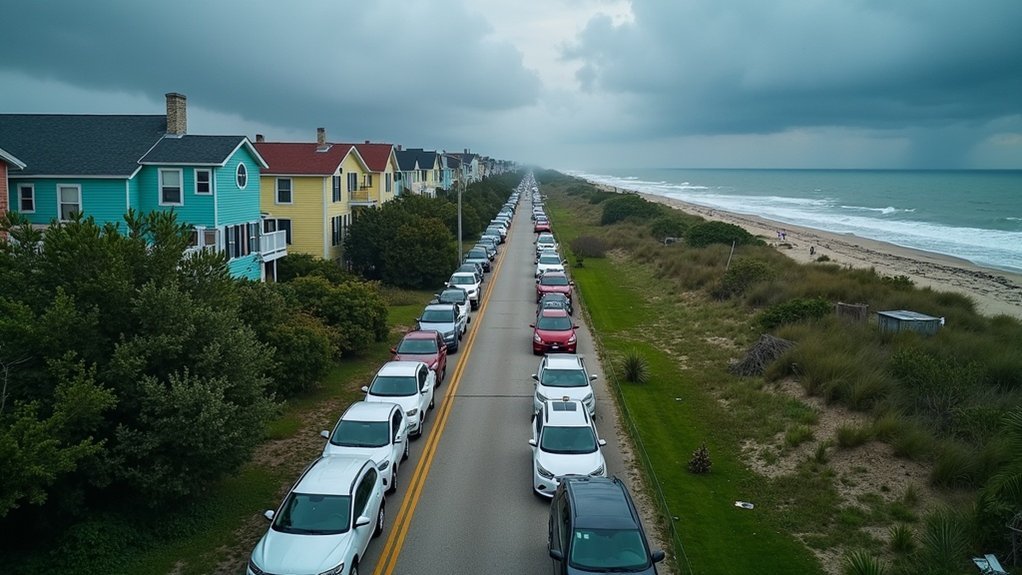
To ensure your vehicle remains protected during hurricanes, it’s crucial to park it in elevated multi-level garages, preferably on the third floor or higher. Opt for outdoor locations on high ground, like shopping center lots, as they provide safe alternatives. Steer clear of flood-prone areas, such as Greens Road and underpasses, where water can accumulate rapidly. Always check garage availability in advance to secure a safe parking spot. For more survival tips and resources on vehicle safety during storms, explore our website dedicated to prepping and survivalism.
Key Takeaways
- Park in multi-level garages on the third floor or higher to safeguard your vehicle from floodwaters during hurricanes, ensuring your preparedness for potential evacuation.
- Utilize elevated outdoor locations, such as shopping center lots, to reduce the risk of flood damage and maintain access to your vehicle when needed.
- Steer clear of street parking and flood-prone areas, particularly intersections known for high water accumulation, to avoid being stranded.
- Confirm garage availability and permissions ahead of time to secure reliable parking options as part of your emergency strategy.
- Opt for covered areas to shield your vehicle from wind-driven debris and heavy rain, protecting your investment during severe weather events.
Understanding Houston’s Hurricane Vulnerability
Understanding Houston’s hurricane vulnerability is crucial for survivalists and preppers, especially given the city’s location along the Gulf Coast, which makes it susceptible to severe weather threats.
The humid subtropical climate leads to heavy rainfall and flooding, particularly from June to November, making preparedness essential. The flat terrain exacerbates these risks, contributing to flash floods and overwhelmed drainage systems.
Historical storms, like Hurricane Harvey, have demonstrated the city’s vulnerability, costing over $125 billion in damages and impacting countless vehicles. With approximately 29,200 water-damaged cars reported, having a solid plan to protect your vehicle is imperative.
Ideal Parking Locations During a Hurricane
When a hurricane approaches, parking in multi-level garages is your best bet for safety, especially on the third floor or higher to steer clear of floodwaters.
If garages aren’t an option, seek elevated outdoor locations that are away from flood-prone areas.
Always prioritize secure areas and check for permission if you’re considering private property.
Multi-Level Parking Garages
Parking your vehicle in a multi-level garage during a hurricane can significantly enhance its chances of weathering the storm unharmed.
These garages, particularly those on the third floor or higher, provide a strategic advantage by elevating your vehicle above potential floodwaters and debris. Their robust construction is designed to withstand high winds, offering protection from falling objects that can cause damage.
Furthermore, multi-level parking garages typically feature advanced drainage systems, minimizing the risk of water damage to your vehicle.
As part of your preparedness plan, always verify garage availability ahead of time and secure any necessary permissions. Ensure your vehicle is parked well in advance of the hurricane’s arrival, so you can focus on other critical survival preparations.
Elevated Outdoor Locations
For those focused on survivalism and prepping, finding safe parking options during a hurricane is crucial. Elevated outdoor locations can provide effective shelter for your vehicle.
Look for areas on higher ground, such as shopping center lots, which can help minimize flood risks. Always ensure you have permission from property owners before parking in these locations.
Position your vehicle on solid surfaces, away from known flood zones, to reduce the risk of water damage. Consider places like the George R. Brown Convention Center, which not only offers elevated parking but can also serve as a refuge during evacuations.
Whenever possible, park under a covered area to shield your vehicle from wind-driven debris and rain, enhancing its protection during the storm.
Being prepared and knowledgeable about your surroundings can make a significant difference in your safety and the safety of your assets during extreme weather events.
Parking Options to Avoid
When preparing for a hurricane, it’s crucial to avoid street parking, particularly in flood-prone areas like Greens Road and the Texas Medical Center.
Underpasses are also hazardous, as they can rapidly fill with water, threatening your vehicle and safety.
To enhance your survival strategy, steer clear of large trees and construction sites to mitigate the risk of falling debris during high winds.
Prioritizing safe parking options is essential for your emergency preparedness.
Street Parking Risks
Parking on the street during a hurricane poses serious risks, especially in areas prone to flooding.
Locations like the Texas Medical Center and streets such as 7000 Main St. are infamous for their severe flooding, which can endanger your vehicle. Underpasses can quickly transform into perilous traps as floodwaters surge, while large trees, power lines, and nearby construction sites heighten the risk of falling debris that could damage your vehicle.
Neighborhoods like Meyerland and East Houston are particularly susceptible to these dangers, making street parking in these regions a risky choice during hurricane threats.
To enhance your survival strategy and protect your vehicle, consider safer alternatives, such as moving your vehicle to elevated or enclosed spaces ahead of the storm.
Flood-Prone Areas
Parking in flood-prone areas can jeopardize not only your vehicle but also your safety, which is crucial for any survivalist.
When planning where to park your car, consider avoiding the following locations:
- Intersections like Greens Road and 45 N. Freeway, infamous for high water accumulation during heavy rains.
- Texas Medical Center and streets like 7000 Main St., which are known for recurring flooding events.
- Neighborhoods such as Meyerland and East Houston, particularly vulnerable during severe storms and heavy downpours.
- Areas near large trees or power lines, as these can pose significant risks from falling branches or downed lines in adverse weather conditions.
Always prioritize safety and make informed choices to protect your vehicle and ensure your well-being in any emergency situation.
Underpass Hazards
Avoiding underpasses during hurricanes is crucial for survival and preparedness, as these areas can flood rapidly, trapping vehicles and endangering lives.
Underpass hazards arise because many are situated in low-lying terrain, making them particularly susceptible to rising floodwaters during storms. Flooding can occur without warning, overwhelming drainage systems, as evidenced by past storms.
Additionally, parked vehicles may incur damage from debris propelled by high winds, leaving them vulnerable in these locations.
To ensure your safety and protect your vehicle, always prioritize alternative parking options on higher ground, steering clear of the significant risks posed by underpasses during hurricane events.
Being proactive and prepared can make a significant difference in emergency situations.
Resources for Safe Vehicle Parking in Houston
As a hurricane approaches, it’s crucial for survivalists to know where to securely park their vehicles in Houston. Consider these strategies for safe parking:
- Multi-level parking garages: Select a spot on the third floor or higher to minimize the risk of flooding.
- George R. Brown Convention Center: This location serves as a designated shelter and permits pets during evacuations.
- Avoid street parking: Steer clear of flood-prone intersections, such as Greens Road and 45 N. Freeway, to prevent damage to your vehicle.
- Harris County Emergency Management: For real-time updates on safe parking locations, contact 713-881-3100.
Additionally, protect your vehicle by covering it with a padded car cover and ensure you have a well-stocked emergency kit on hand.
Stay vigilant and prepared!
Preparing Your Vehicle Before the Storm
Before the storm hits, it’s crucial to prepare your vehicle to minimize potential damage and ensure your safety. Start by conducting a thorough inspection of your vehicle for any mechanical issues that could hinder its performance.
Fill your gas tank to capacity; this will be essential not only during the storm but also for any evacuation or emergency travel afterward. Document your vehicle’s condition by taking photographs from multiple angles, as this can be invaluable for insurance claims if needed.
Avoid parking in flood-prone areas, particularly near underpasses, large trees, and power lines, as these can pose significant risks during severe weather.
Additionally, plan backup parking options in advance to avoid last-minute decisions when the storm approaches. By taking these proactive steps, you can protect your vehicle and reduce stress during the storm, ensuring that you’re prepared for any situation that may arise.
Safety Tips for Driving During a Hurricane
Driving during a hurricane can be extremely dangerous, making it crucial to be well-prepared and informed. Here are some survival tips to help you stay safe while on the road during these severe weather events:
- Avoid Flooded Areas: Even six inches of standing water can cause a vehicle to lose control. It’s best to steer clear of any flooded roads.
- Stay Informed: Keep a close eye on weather reports and alerts; conditions can change rapidly during a hurricane.
- Beware of Hazards: Watch out for washed-out roads and downed power lines. Always treat these as live hazards to avoid accidents.
- Enhance Visibility: Keep your headlights on to improve visibility and refrain from using cruise control, as it may be difficult to respond quickly to changing road conditions.
In addition, ensure your vehicle is equipped with an emergency kit that includes water, a flashlight, non-perishable food, a first aid kit, and a blanket.
This preparation can be vital if you find yourself stranded during a hurricane. Always prioritize safety and be ready for any situation.
Post-Storm Vehicle Inspection and Actions
Once the storm has passed, it’s crucial for survivalists and preppers to conduct a thorough inspection of your vehicle for any signs of water damage.
Begin by checking for water inside the car, as this could affect your ability to evacuate quickly in an emergency. Examine the undercarriage and wheel wells for accumulated debris, as this can impact your vehicle’s performance in critical situations.
If you suspect water has entered the engine or if the vehicle has been submerged, avoid starting it to prevent further damage, which could leave you stranded.
Check fluid levels, including oil and coolant, to ensure they aren’t contaminated, as clean fluids are vital for reliable operation.
Document any visible damage with photographs for your insurance claims, and report any issues to your insurance company promptly for potential flood-related coverage.
Being proactive in these inspections can be key to maintaining your vehicle’s reliability in times of crisis.
Community Support for Hurricane Preparedness
As hurricanes approach, community support is essential for effective preparedness and survival. Engaging in local meetups allows you to exchange vital hurricane safety strategies and identify secure parking options for your vehicles.
Consider the following actions to enhance your readiness:
- Join local survival organizations like Hope Force International for training and resources on emergency preparedness.
- Stay informed about Harris County Emergency Management’s designated safe parking areas to protect your vehicles.
- Encourage your neighbors to take necessary precautions, building a resilient community that can withstand disasters.
- Utilize social media platforms to disseminate tips and updates, reinforcing community networks and ensuring everyone is prepared.