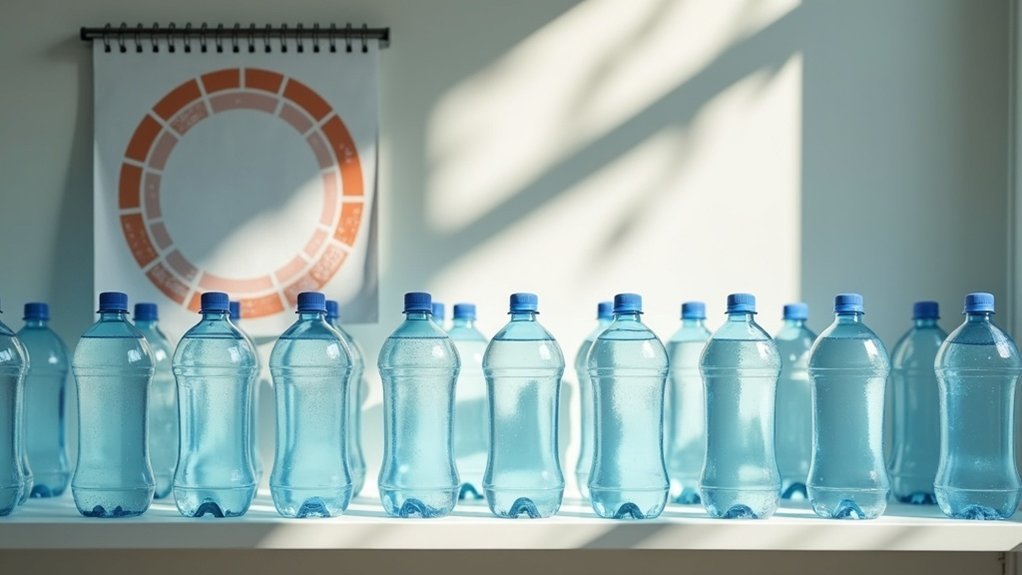
You need to rotate your stored water every 6 to 12 months to ensure its safety and quality for your preparedness supplies. Over time, stored water can become contaminated, putting your health at risk, especially in survival situations. To determine if it’s time to rotate, check for cloudiness, foul odors, or residue buildup. Regular inspections are crucial for identifying these issues early, which is vital when resources are limited. Additionally, you can implement best practices for storage and treatment to enhance your water supply’s longevity. Stay informed about effective water management techniques to keep your emergency supply safe and reliable.
Key Takeaways
- Rotate stored water every 6 months to ensure optimal quality and reduce the risk of contamination, crucial for survival situations.
- Replace older water supplies every 12 months to guarantee that you have safe drinking water in case of emergencies.
- Conduct routine inspections for signs of contamination, such as cloudiness or foul odors, which could compromise your water supply.
- Establish a reliable rotation schedule to ensure that you have access to clean water when facing unforeseen circumstances.
- Regularly check your containers for wear and damage to prevent leaks and spoilage, vital for maintaining a sustainable preparedness plan.
Why Regular Rotation of Stored Water Is Essential
While it might seem that stored water can last indefinitely, regular rotation is crucial for preserving its quality and safety in a survival situation.
Even properly stored municipal water can become contaminated over time, posing health risks when you need it most. By rotating your stored water every 6-12 months, you ensure access to clean drinking water, a vital component of your emergency preparedness plan.
Regularly rotating your stored water every 6-12 months is essential for ensuring safe, clean drinking water in emergencies.
Watch for signs of contamination, such as cloudiness, foul odors, or algae growth, which indicate it’s time to refresh your supply. Additionally, keep an eye on expiration dates for bottled water, as this is especially important for vulnerable groups.
Consistent monitoring not only safeguards your water supply but also helps prevent the growth of harmful bacteria, ensuring you’re ready for any scenario.
Recommended Rotation Frequency
To ensure the quality of your stored water and enhance your survival readiness, it’s essential to check and rotate it every 6 to 12 months.
Although treated municipal water can last indefinitely, conducting regular quality checks is vital for ensuring safety in emergency situations.
Indefinite Water Longevity
While stored municipal water can theoretically last indefinitely under optimal conditions, it’s crucial for survivalists and preppers to establish a rotation schedule every 6-12 months to ensure its quality and safety. Regularly rotating your water supply is essential for maintaining clean water in emergency situations and preventing potential contamination. During your routine checks, be vigilant for indicators such as a cloudy appearance or unpleasant odors, which signal that it’s time for replacement.
| Rotation Frequency | Recommended Action |
|---|---|
| Every 6 Months | Inspect and Rotate Water |
| Every 12 Months | Replace Older Supplies |
| Routine Checks | Assess for Contamination |
| Emergency Preparedness | Confirm Safe Access to Water |
General Rotation Guidelines
Establishing a reliable rotation schedule for your stored water is crucial for ensuring its quality and safety over time, especially for preppers and survivalists.
It’s recommended to rotate your supply every 6-12 months to maintain the quality of your stored water and prevent bacteria or algae growth. For commercially bottled water, adhere to the expiration date for optimal safety.
Always check your water for signs that it may need rotation, such as a cloudy appearance, foul smell, or buildup around the container edges.
Regularly monitoring your emergency water supply ensures that you’ll have access to clean water when you need it most, which is essential in any survival situation.
Regular Quality Checks
Regular quality checks are crucial for ensuring the safety and drinkability of your stored water, especially in survival situations.
To keep your emergency water supplies reliable, adhere to the following guidelines:
- Frequency: Conduct checks on your stored water every 6-12 months to ensure it remains safe for consumption.
- Inspect Containers: Examine each container for signs of contamination, such as build-up around the edges or a cloudy appearance that may indicate spoilage.
- Odor Test: Perform an odor test by smelling the water; any foul odors are a clear sign that the water may not be safe to drink.
- Label Each Container: Clearly mark fill dates on each container to help track rotation and ensure timely inspections, allowing for effective management of your emergency supplies.
Indicators That Water Needs to Be Rotated
When assessing your stored water supply, several key indicators can signal the urgent need for rotation. A build-up around the edges of the container may suggest potential contamination, prompting immediate action.
The presence of bacteria growth or algae is a critical warning sign that necessitates an immediate rotation of your water supply. Additionally, if the water appears cloudy, it indicates a significant decline in quality, making replacement crucial.
A foul odor is another alarming indicator that the water is no longer safe for consumption. To ensure your water remains safe and effective for survival situations, conduct regular checks every 6-12 months.
This practice not only helps maintain quality but also makes it easier to identify these vital indicators that require your attention for timely water rotation.
Best Practices for Preserving Water Quality
To ensure the quality of your stored water, especially in the context of survivalism and prepping, it’s crucial to adhere to best practices that prevent contamination and degradation.
Here are four essential steps:
- Choose the Right Containers: Opt for dark, opaque containers, such as blue or green, to limit light exposure and thwart the growth of algae, which could compromise your water supply.
- Store in a Cool Environment: Keep your water storage in a cool area, away from direct sunlight and any heat sources. This will help maintain the integrity of your water over time.
- Regularly Inspect Your Supplies: Frequently check your water containers for any signs of wear, damage, or leaks. This proactive approach ensures the safety and reliability of your emergency water reserves.
- Rotate and Refresh Your Water: To ensure that your stored water remains clean and safe for use, rotate and refresh it every 6-12 months.
This practice is vital for preparedness and can make a significant difference in an emergency situation.
Steps for Cleaning Water Containers
Cleaning water containers is crucial for ensuring safe water storage in any survival or prepping situation.
Cleaning water containers is vital for safe water storage in survival and prepping scenarios.
Begin in a spacious area for ease of access. Use a mixture of mild soap and warm water to wash the containers, scrubbing the insides with a brush or sponge to effectively remove residues that could compromise water safety.
For hard-to-reach areas, utilize a scratch pad or bottle brush to ensure thorough cleaning of all surfaces.
Once cleaned, rinse the containers thoroughly with clean water to eliminate any soap or chemical residues.
If the container has been exposed to harmful substances, repeat the cleaning process to confirm it’s safe for water storage before refilling.
Regular maintenance of your water containers is an essential practice for preparedness and survival.
Methods for Treating Water Before Storage
When preparing water for storage in a survival situation, it’s crucial to consider several effective treatment methods to ensure your water supply remains safe and clean.
Boiling water is one of the simplest and most reliable ways to eliminate harmful pathogens, making it essential for any prepper’s toolkit.
Chemical disinfection using unscented bleach or iodine tablets is another viable option that can be easily stored and utilized when necessary.
Furthermore, incorporating filtration systems can significantly enhance water quality by removing impurities and contaminants before you store it, ensuring you have a reliable source of water when you need it most.
Always prioritize water treatment methods to safeguard your health and survival.
Boiling Water Method
Boiling water is one of the most essential and effective methods for treating water before storage, especially for survival situations where clean water is critical. This method eliminates harmful bacteria, viruses, and pathogens, ensuring that you have safe drinking water when you need it most.
To guarantee clean water, follow these steps:
- Bring water to a rolling boil for at least one minute to ensure all contaminants are eradicated.
- If you’re at an altitude above 5,000 feet, increase the boiling time to three minutes, as higher elevations require longer boiling to achieve the same purification effects.
- After boiling, allow the water to cool before transferring it to sanitized storage containers. Proper storage is crucial for maintaining the safety of your water supply.
- Cover the water during the cooling process to prevent any potential recontamination, protecting your resource for future use.
Being prepared with clean water is a key aspect of survivalism and prepping, so make sure to incorporate boiling water into your water treatment strategies.
Chemical Disinfection Technique
Following the boiling method, chemical disinfection is a vital technique for ensuring your water supply is safe before storage, especially for preppers and survivalists.
Unscented bleach is an effective option; simply add six drops per gallon of clear water or 1/4 teaspoon for cloudy water. After treatment, allow the water to sit for at least 30 minutes to ensure maximum effectiveness.
As an alternative, iodine tablets are also a reliable method, requiring one tablet per quart of water, followed by a 30-minute waiting period.
Always use food-grade plastic water containers to prevent any harmful chemical reactions.
Remember to label each container with the treatment date and method to help maintain a safe rotation of your stored water supply, ensuring you’re always prepared for any situation.
Filtration Systems Overview
While boiling and chemical disinfection are fundamental methods for treating water in survival scenarios, filtration systems provide an advanced solution for improving water quality before storage.
Consider these filtration methods that are essential for preparedness:
- Activated Carbon Filters: Effectively remove chlorine and enhance taste, making your water more palatable.
- Reverse Osmosis Systems: Capable of eliminating heavy metals and a wide range of contaminants, ensuring the purity of your water supply.
- Ceramic Filters: Highly effective against bacteria and sediment, providing an extra layer of protection for your drinking water.
- UV Light Systems: Inactivate harmful pathogens without the use of chemicals, preserving the integrity of your water.
Incorporating water filtration into your survival strategy guarantees that you have reliable, clean water stored for emergencies.
While boiling and unscented bleach are useful methods, filtration not only improves safety but also enhances the overall quality of water, making it a crucial component of your water treatment plan in prepping for any situation.
Common Mistakes to Avoid in Water Storage
When it comes to water storage for survival and prepping, it’s vital to avoid common mistakes that could compromise safety and quality.
First and foremost, steer clear of non-food-grade containers, as they can leach harmful chemicals into your water supply. Never repurpose containers that previously held toxic substances, since any residues can contaminate your water, rendering it unsafe.
Avoid using non-food-grade containers for water storage, as they may leach harmful chemicals and compromise safety.
Ensure that your water containers are sealed tightly to keep out dust and pests, and conduct regular inspections of their seals to prevent leaks that could waste valuable resources.
Also, don’t overlook the importance of proper labeling and the rotation of your stored water. Clearly label each container with fill dates and make it a practice to rotate your supplies every 6-12 months to ensure maximum freshness and usability.