To ensure your survival kits are ready for any situation, it’s crucial to refresh medications at least every six months. This practice guarantees safety and effectiveness, allowing you to stay prepared when it matters most. Regularly inspecting your supplies helps you spot expired or damaged items, ensuring your gear remains reliable. Tailor your medications to meet your specific health needs, including essential prescriptions and over-the-counter options that may be critical during emergencies. By maintaining a detailed inventory and organized storage, you’ll be better equipped for unforeseen challenges. Interested in learning more about essential items to include and the best ways to store your medications for optimal preparedness?
Key Takeaways
- Refresh medications in survival kits at least every six months to ensure their effectiveness and safety in emergency situations.
- Regularly inspect for expired or damaged items, and replace them promptly to maintain readiness.
- Keep a detailed log of expiration dates to simplify the refresh process and ensure all supplies are current.
- Immediately replace any used items after every expedition or training exercise to ensure your kit is always stocked.
- Consult with healthcare providers to customize prescription medications according to individual health needs and potential survival scenarios.
Importance of Regular Medication Checks
Regular medication checks are crucial for survivalists and preppers, especially considering that over 60% of U.S. adults manage chronic conditions that necessitate daily medications. Expired prescription medications can lose their effectiveness or alter in composition, posing a serious risk to your health during emergencies.
By conducting biannual maintenance of your medical kit, you can ensure that all items are current and within their expiration dates, guaranteeing you have reliable medications ready for any situation.
Moreover, maintaining an up-to-date list of your medications allows for efficient inventory management and timely restocking. Regular inspections also enable you to reassess your kit’s contents based on evolving family health needs, ensuring that vital medications are always accessible when you need them the most.
In the world of survivalism, preparedness means having the right resources at your fingertips, and that includes effective medications.
Recommended Frequency for Refreshing Medications
It’s crucial for survivalists to refresh their medications at least every six months to ensure they remain effective and safe for use in emergencies.
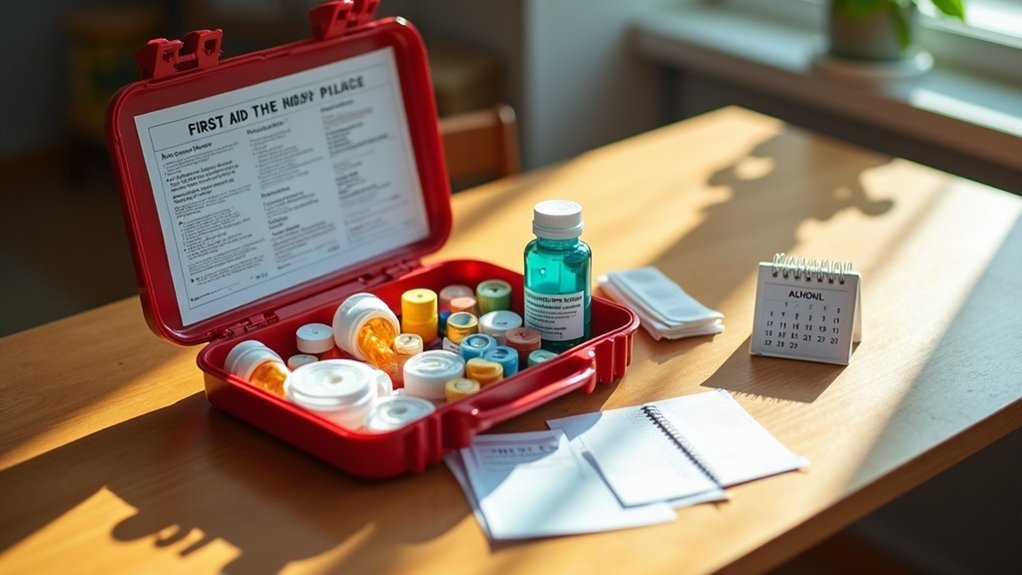
Regularly inspect your first aid kit for any expired or damaged items, as these could compromise your preparedness. After every expedition or training exercise, replace any items you’ve used and assess the shelf life of the remaining medications.
Regularly check your first aid kit for expired items and replenish used supplies after each outing to maintain readiness.
Prescription medications come with specific expiration dates, so be diligent in replacing them as needed. Over-the-counter medications also require careful evaluation, as their shelf life can vary significantly.
Keeping a detailed log of expiration dates will streamline this process, ensuring your kit is reliable and ready for any situation when you need it most.
Identifying Expired or Damaged Items
How do you ensure your emergency medication kit is always primed for action?
Begin by regularly checking expiration dates on all medications, as many can lose potency within 1 to 5 years.
Inspect the packaging for any signs of damage, such as tears or rust, which can lead to contamination and compromise your supplies.
Be aware that creams and gels can undergo chemical changes over time, posing safety risks if utilized beyond their expiration dates.
Store your medications in a cool, dry environment to prevent heat and humidity from accelerating degradation.
It’s essential to conduct a thorough review of your kit every six months to guarantee your emergency preparedness remains reliable and effective, ensuring you’re equipped for any situation that may arise.
Essential Prescription Medications to Include
An emergency medication kit is a crucial component of any survivalist or prepping strategy. It’s essential to include prescription medications that are tailored to your specific health needs, as these can be lifesaving during critical situations when access to healthcare may be restricted. Always consult with your healthcare provider to ensure that your emergency kit is stocked with the right prescriptions. Below are some key medication types to consider including:
| Medication Type | Examples |
|---|---|
| Antibiotics | Amoxicillin, Azithromycin |
| Antihistamines | Diphenhydramine |
| Emergency Inhalers | Albuterol, EpiPens |
These medications are vital for addressing infections, allergic reactions, and respiratory issues that could arise in a survival scenario. It’s important to regularly check and update your supplies to ensure they are appropriate for all family members and remain effective. Being prepared with the right medications can make a significant difference in emergency situations.
Must-Have Over-the-Counter Medications
Including at least five must-have over-the-counter (OTC) medications in your emergency preparedness kit is crucial for dealing with unforeseen health issues during a crisis.
Ensure your kit is stocked with pain relievers like acetaminophen and ibuprofen to alleviate discomfort and manage fever. Antacids such as TUMS and famotidine are essential for addressing gastrointestinal problems.
Don’t overlook the importance of electrolyte tablets for maintaining hydration and allergy medications like loratadine or cetirizine to combat allergic reactions. Additionally, cold and flu medications, including decongestants, should be part of your supplies.
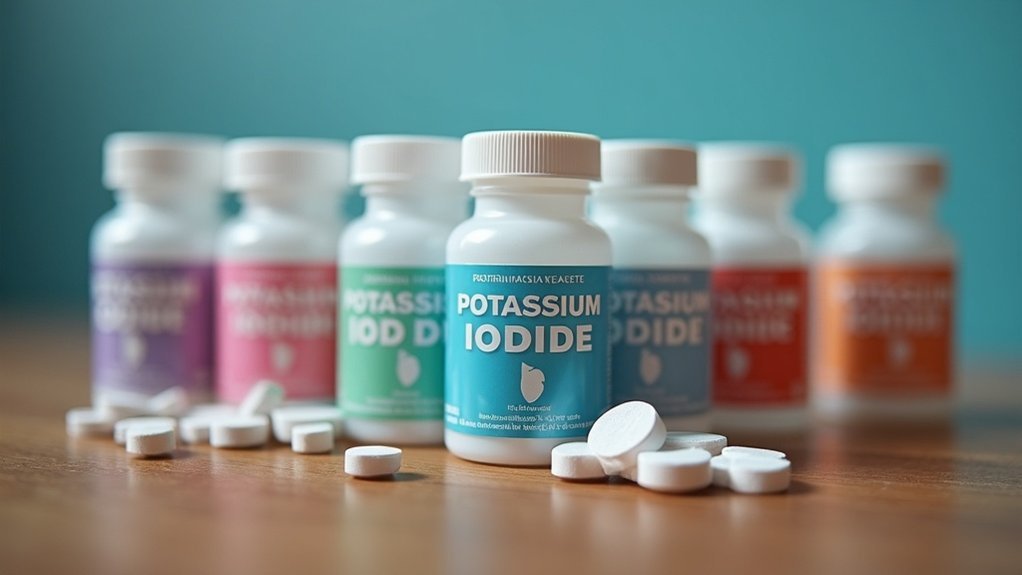
Regularly inspect these OTC medications, as many have a shelf life of one to five years, ensuring they remain effective when you need them most in survival situations.
Best Practices for Storage and Organization
Effective storage and organization of medications in your emergency preparedness kit is crucial for surviving unforeseen health crises. Store your kit in a cool, dry place, away from sunlight and humidity, to ensure your medications retain their effectiveness.
Utilize clear, labeled containers or pill organizers for quick access and easy identification during emergencies. Conduct biannual checks to replace expired items and remove medications that are nearing their expiration date.
Maintain a detailed inventory list of all medications, including their expiration dates and quantities, to streamline your management process. Prioritize including personal medications for chronic conditions, and make sure to update them regularly to align with your household’s evolving needs.
This proactive approach will enhance your overall preparedness and resilience in times of crisis.
Tips for Updating Your Emergency Kit
To ensure your emergency kit is primed for any survival situation, it’s essential to regularly update its contents. Conduct biannual checks—ideally every six months—to replace expired medications and confirm that all items are in optimal condition.
Rotate medications by placing new supplies at the front, ensuring that older items are easily accessible for use. Keep a comprehensive inventory list that documents expiration dates to facilitate timely replacements.
Store medications in a cool, dry environment, away from direct sunlight, to maintain their effectiveness. Additionally, regularly review your emergency plan and adapt it to any changes in your family’s health needs, ensuring that your kit remains comprehensive and ready for any potential crisis.