You should discard spoiled food immediately upon noticing visible mold, foul odors, or unusual textures. In survival situations, it’s crucial to trust your senses—if anything seems off with perishable items like dairy, meat, or seafood, don’t hesitate to dispose of them. Canned goods with dents or leaks can pose serious health risks and should also be discarded. If you’re uncertain about storage times or specific signs of spoilage, continue reading for essential tips on food safety and effective disposal methods to ensure your survival supplies remain safe and effective.
Key Takeaways
- Discard dairy products if they have a sour smell or show signs of curdling, as these can compromise your food supply in a survival situation.
- Throw away raw meat or poultry if it emits a foul odor or has a slimy texture, as spoiled protein sources can lead to illness during critical times.
- Dispose of eggs that float during the float test, indicating spoilage, to ensure you’re consuming safe and nutritious food.
- Canned foods should be discarded if they are dented, bulging, or leaking, as these signs can indicate contamination that could jeopardize your health.
- Toss any frozen food with freezer burn or unpleasant odors, as they may not be safe to eat and could waste valuable resources in your preparedness plan.
Understanding Expiration Dates
When you check the expiration dates on food products, it’s crucial to understand what each label signifies, especially for those focused on survivalism and prepping.
The Sell-By Date indicates the last day retailers should sell a product, but it doesn’t guarantee food safety, so it’s essential to assess the condition of the food yourself.
The Sell-By Date marks the last sale day, but assessing food condition is key for safety.
The Best-By Date suggests peak quality; food may still be safe to eat after this date, making it useful for long-term storage planning.
The Use-By Date is crucial for perishable foods, marking the last recommended day for optimal safety, which is especially important for your emergency supplies.
Finally, the Freeze-By Date helps maintain quality when freezing, allowing you to extend the shelf life of your food reserves.
Always prioritize following these guidelines, particularly for sensitive items like infant formula, which mustn’t be consumed past its expiration date for safety reasons, ensuring you have safe and reliable food sources during challenging times.
Guidelines for Perishable Foods
Perishable foods require careful monitoring to ensure safety and quality, especially when it comes to your emergency supplies. In the context of survivalism and prepping, it’s crucial to know when to discard common foods to avoid health risks. Here’s a quick guide to help you determine when to throw away perishable items:
| Food Item | Guidelines for Disposal |
|---|---|
| Dairy Products | Discard if you detect a sour smell or curdling |
| Raw Meat/Poultry | Discard if there’s a foul odor or slimy texture |
| Eggs | Discard if they float in water during the float test |
| Fresh Seafood | Discard if you notice a strong odor |
| Cooked Meat | Discard if it has a slimy texture or unpleasant smell |
Always check for these signs to ensure your food supplies are safe to consume and to minimize unnecessary expiration risks during emergencies. Being prepared means knowing how to handle perishable items effectively.
Handling Produce
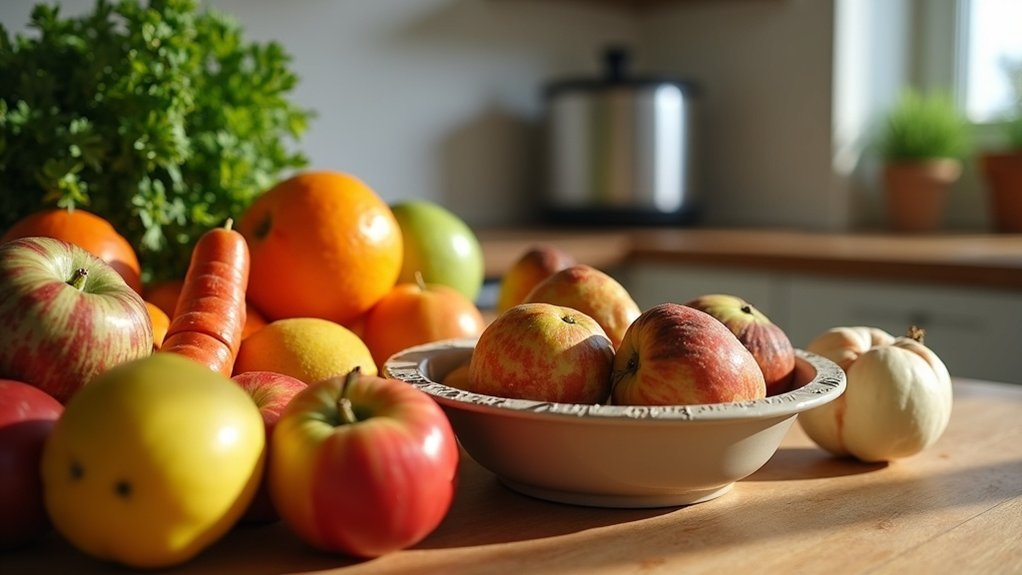
Knowing how to handle produce is essential for maintaining its freshness and safety, especially in survival situations.
For leafy greens, discard any that are slimy or smell rotten, while slightly wilted ones can still be cooked or revitalized.
Root vegetables can last weeks to months when stored properly but should be tossed if you notice mold, odor, or shriveling.
Berries require careful inspection; one moldy berry can spoil the whole bunch, which is critical to consider when foraging or storing food.
Fruits with small blemishes are usually fine, but mushy, foul-smelling, or moldy ones should be discarded to avoid contamination.
Always store produce in proper conditions, such as a cool, dry place, to greatly extend their freshness and usability, ensuring you have nutritious food supplies readily available during emergencies.
Recognizing Spoiled Food
Proper handling of produce is essential for survival and prepping, as it ensures you can effectively recognize spoiled food.
Always inspect for visible mold or discoloration; these are clear indicators of spoilage and should prompt immediate disposal to prevent health risks.
A slimy or sticky texture on meat, poultry, or produce signifies that it’s no longer safe to eat, and such items should be discarded without hesitation.
Foul or sour odors are also warning signs that food has gone bad, making it crucial to trust your senses.
Additionally, bubbling or foaming in liquids like sauces can indicate spoilage, which shouldn’t be ignored.
Lastly, if you encounter an unusual taste, it’s best to err on the side of caution and dispose of the food.
Staying vigilant about food safety is vital for your preparedness and overall well-being!
Disposal Guidelines for Canned and Frozen Foods
When it comes to canned and frozen foods, understanding how to dispose of them safely is crucial for your survival preparedness. Discard canned foods if the can is dented, bulging, or leaking, as these conditions pose a significant risk to your health in a survival situation.
While light rust may be acceptable, heavy rust indicates it’s time to eliminate it from your supplies. A foul smell is a clear sign of spoilage, so don’t hesitate to discard any compromised items.
For frozen foods, it’s important to be vigilant. Toss items that show signs of freezer burn or emit unpleasant odors, as these can indicate that the food is no longer safe to consume.
If thawed food has been exposed to temperatures above 40 degrees Fahrenheit for more than two hours, it’s best to discard it to avoid potential foodborne illness and ensure your resources remain safe for consumption.
Proper disposal of these items is key to maintaining a reliable food supply in your prepping strategy.