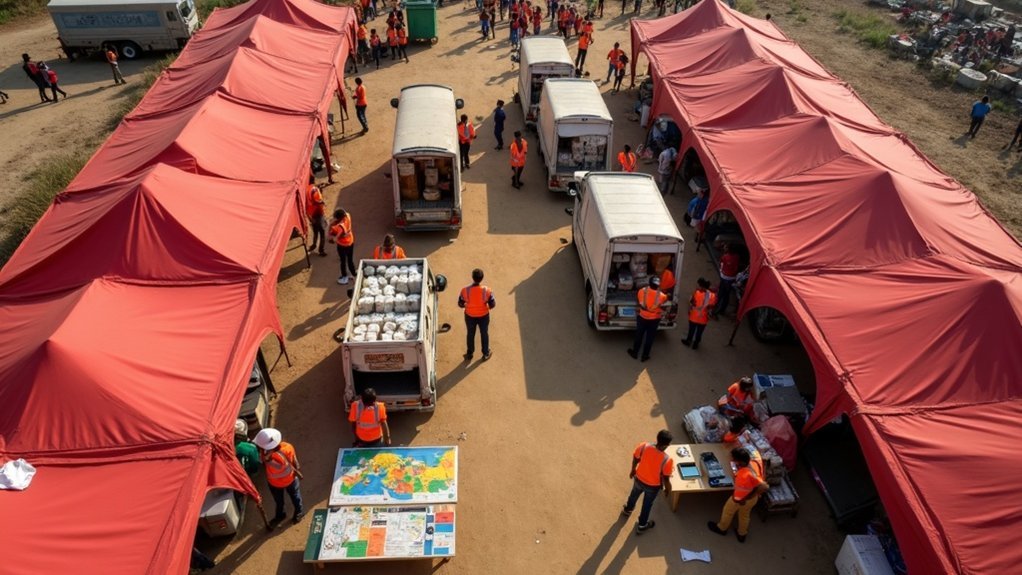
To effectively track relief resources and distribution points in a survival situation, leverage real-time data and GPS technology for accurate monitoring. Implement a centralized database to manage supplies and streamline inventory using RFID technology. Collaborate with local authorities and trusted survival networks for valuable insights and transparency. Create a rapid response logistics framework to ensure quick delivery of essential supplies when disaster strikes. Stay organized and proactive in your approach, and you’ll discover additional strategies to enhance your resource management and preparedness for any emergency.
Key Takeaways
- Leverage real-time data and GPS technology to effectively monitor the location and status of survival resources.
- Implement RFID technology for precise inventory tracking and management of supplies in transit, ensuring you have what you need when it counts.
- Create a centralized database to consolidate information from suppliers and local prepping networks for optimal resource allocation.
- Collaborate with local authorities and preparedness organizations to gain insights and ensure accountability in resource distribution.
- Establish a rapid response logistics framework to facilitate quick delivery and efficient tracking of emergency supplies for your survival needs.
Importance of Real-Time Data in Relief Tracking
When disaster strikes, having access to real-time data is crucial for survivalists and preppers aiming to track and allocate relief resources effectively. Immediate information enables you to stay updated on the status and location of supplies, which is essential for efficient logistics in emergency situations.
Utilizing tools like RFID technology can greatly enhance inventory management, minimizing the risks of miscounting or misplacing crucial shipments. A real-time relief distribution framework allows you to adapt to current conditions, ensuring faster delivery times for your preparedness efforts.
Utilizing GPS Technology for Efficient Monitoring
Utilizing GPS technology for efficient monitoring is a game changer in the realm of survivalism and prepping. With real-time tracking, you can keep tabs on the location and status of your essential supplies and equipment throughout your preparedness efforts.
Integrating GPS data with mapping tools helps visualize your supply network, identifying potential bottlenecks and optimizing routes for quicker access to resources when needed. By equipping your vehicles and transport methods with GPS devices, you enhance logistical planning and response times during emergencies or disaster scenarios.
Additionally, GPS systems provide historical data, allowing you to analyze past supply runs and improve your future prepping strategies. This technology fosters better communication among your survival team, ensuring coordinated efforts and timely updates on resource availability.
Centralized Database for Resource Management
Integrating GPS technology into your survival and prepping strategy establishes a centralized database that enhances efficiency in managing essential resources. This database allows for real-time monitoring of supplies and equipment, improving transparency and accountability in preparedness efforts. It consolidates information from various sources, including local suppliers and community networks, to provide a comprehensive view of resource availability. By employing technologies like RFID, you can streamline inventory management, ensuring that vital supplies are always on hand when disaster strikes. A centralized approach also aids decision-making, optimizing resource allocation while minimizing waste and redundancy.
| Benefits | Description |
|---|---|
| Real-time Tracking | Monitors resources and supply locations instantly |
| Enhanced Coordination | Improves collaboration among prepper groups and communities |
| Data-Driven Decisions | Analyzes past data for effective resource allocation |
Engaging Local Authorities and NGOs
Engaging local authorities and NGOs is crucial for effectively tracking and managing survival resources, as they’ve valuable insights and established networks that can enhance preparedness and response efforts.
Engaging local authorities and NGOs enhances preparedness and response efforts through valuable insights and established networks.
Regularly attend city council and community meetings to stay informed about disaster recovery funding and initiatives that can support your prepping efforts.
Collaborate with NGOs to access detailed reports on resource distribution, ensuring accountability and transparency in how supplies are allocated.
Utilize platforms like USAspending.gov to monitor public funds directed towards these organizations, which can aid in resource planning.
Building relationships with local policymakers fosters ongoing communication, allowing you to make timely adjustments to your preparedness strategies based on the evolving needs of your community.
This proactive approach significantly improves efficiency in resource management and distribution, essential for effective survivalism.
Strategies for Effective Coordination in Emergency Logistics
While disasters can strike unexpectedly, having effective strategies for coordination in emergency logistics is crucial for survivalists and preppers.
Establish a real-time relief distribution framework to optimize logistics and minimize delivery times for critical supplies essential for self-sufficiency. Incorporate RFID technology to accurately track your inventory of survival gear and supplies, ensuring you have the right quantities on hand when needed.
Collaborate with local authorities and community prepper groups to gather diverse information sources, enhancing your situational awareness and decision-making. Focus on rapid response logistics over cost, ensuring that emergency supplies, such as food, water purification systems, and medical kits, are delivered quickly to those in need.
Regularly update your distribution records and inventory lists to maintain accuracy and accountability, ensuring that your preparedness efforts remain effective and that resources reach the right individuals promptly.