Yes, bleach definitely expires for water disinfection, which is crucial knowledge for survivalists and preppers. Its effectiveness diminishes considerably after 6 months to 1 year due to the breakdown of sodium hypochlorite, making it less reliable for emergency situations. Signs of expired bleach include a darker color and lack of odor, indicating reduced potency. For optimal safety and preparedness, replace opened bleach bottles every 6 months and store them properly, away from light and heat. Keeping track of expiration dates is essential for ensuring reliable disinfection when it matters most. Additionally, understanding proper handling and disposal methods can enhance your overall readiness for unforeseen circumstances.
Key Takeaways
- In a survival situation, it’s crucial to understand that bleach has a shelf life of 6 months to 1 year. After this period, its effectiveness for disinfecting water diminishes significantly.
- The sodium hypochlorite in bleach degrades over time, reducing its ability to purify water effectively.
- If you notice a lack of strong bleach odor or if the color has darkened, it may indicate that the bleach is no longer suitable for disinfection.
- Using expired bleach can pose health risks and may not adequately purify water, which is critical for survival.
- To ensure you have a reliable source of disinfection, make it a practice to regularly replace opened bleach bottles every 6 months as part of your prepping strategy.
Understanding Bleach Shelf Life
When considering the use of bleach for water disinfection in your survival or prepping strategy, understanding its shelf life is essential, as it directly influences its effectiveness in critical situations.
Bleach typically has a shelf life of about 6 months to 1 year. After 6 months, its disinfecting properties can diminish by approximately 20% each year due to the breakdown of sodium hypochlorite.
To determine the age of your bleach supply, check the production code on the bottle, which indicates the manufacturing date.
For optimal preparedness, it’s advisable to replace opened bleach bottles every 6 months, particularly for vital applications like water treatment.
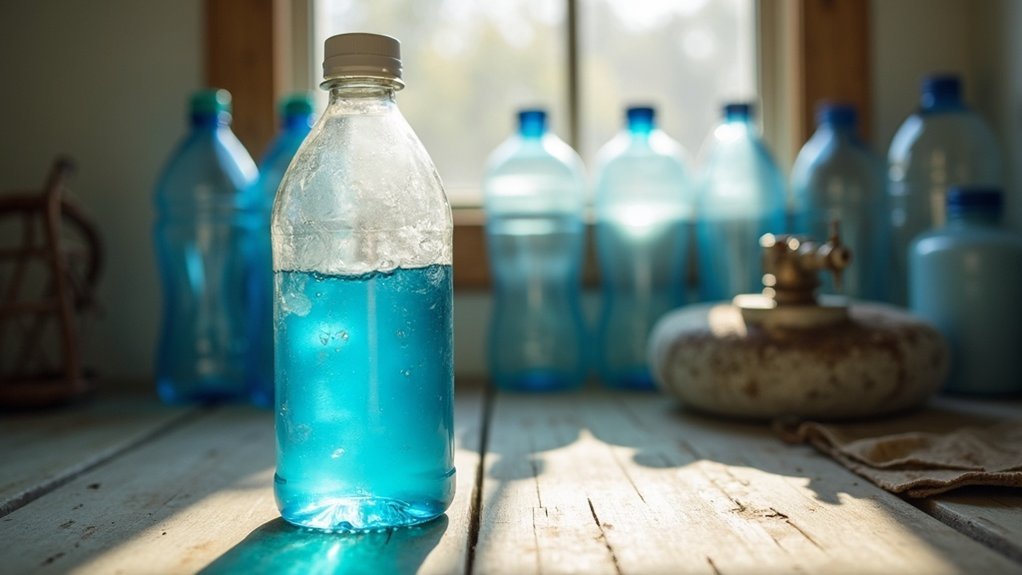
Always store bleach properly, away from sunlight, to extend its shelf life and ensure you’re ready for any emergency.
Signs of Expired Bleach
Recognizing the signs of expired bleach is crucial for effective water disinfection, especially in survival situations where clean water is vital.
If you notice a color change to a darker shade than light yellow, it may indicate that the bleach has degraded and is no longer reliable. Additionally, a lack of strong bleach odor suggests that the sodium hypochlorite concentration has diminished, signaling expiration.
A darker color than light yellow or weak odor indicates that your bleach may have expired and is unfit for use.
Always check the production codes on the bottle to determine the age of your bleach, as they indicate when it was manufactured. If your bleach is over one year old, it’s time to replace it, as its effectiveness diminishes considerably past the expiration date.
In prepping, ensuring that your supplies are current is essential for maintaining readiness in emergency situations.
Proper Storage Techniques
To ensure that bleach remains effective for water disinfection in survival situations, proper storage techniques are critical.
Store bleach in a cool, dry place, ideally between 50-70°F, to preserve its disinfecting power. Avoid exposure to direct sunlight, as UV rays can degrade sodium hypochlorite.
Use opaque containers to shield against light exposure, which can diminish effectiveness. After opening, mark a “use-by” date on the bottle; typically, bleach lasts six months to one year when stored correctly.
Keep in mind that the disinfecting power decreases by about 20% each year once opened, so monitoring expiration dates is essential to ensure you’re using bleach that remains effective for disinfection in emergency preparedness scenarios.
Effects of Using Expired Bleach
Using expired bleach for water disinfection can pose significant risks, especially for survivalists and preppers who rely on effective water purification methods. Over time, the potency of sodium hypochlorite bleach diminishes, degrading at an alarming rate of about 20% per year. After just 6 months to 1 year, it breaks down into salt and water, rendering it ineffective for killing pathogens. This degradation can lead to serious health risks if you’re counting on it for safe drinking water during emergencies or in survival situations.
| Signs of Expired Bleach | Effects | Recommendations |
|---|---|---|
| Lack of odor | Ineffective disinfecting | Regularly replace bleach to maintain readiness |
| Darker color | Reduced efficacy | Always check before use, especially in critical situations |
| Over 6 months old | Potential health risks | Use only fresh bleach for optimal safety |
For preppers, ensuring that your water purification methods are reliable is crucial for survival. Regularly assess your supplies and replace expired bleach to avoid compromising your health and safety.
Safe Disposal Methods for Bleach
When you find yourself with expired bleach, it’s crucial to dispose of it safely to ensure both your health and the environment are protected.
In a survivalist context, managing resources wisely is essential. First, dilute the expired bleach with water before pouring it down the drain, adhering to local regulations concerning hazardous waste. Always consult your municipality’s guidelines, as some classify bleach as hazardous material that requires specific disposal methods.
For larger quantities, transport them to a designated hazardous waste facility, especially important when prepping for long-term survival situations. Additionally, avoid mixing bleach with other cleaners to prevent dangerous chemical reactions.
You can also repurpose expired bleach for non-critical cleaning tasks, such as scrubbing toilet bowls, which helps minimize waste and can be useful in maintaining hygiene in a survival scenario.