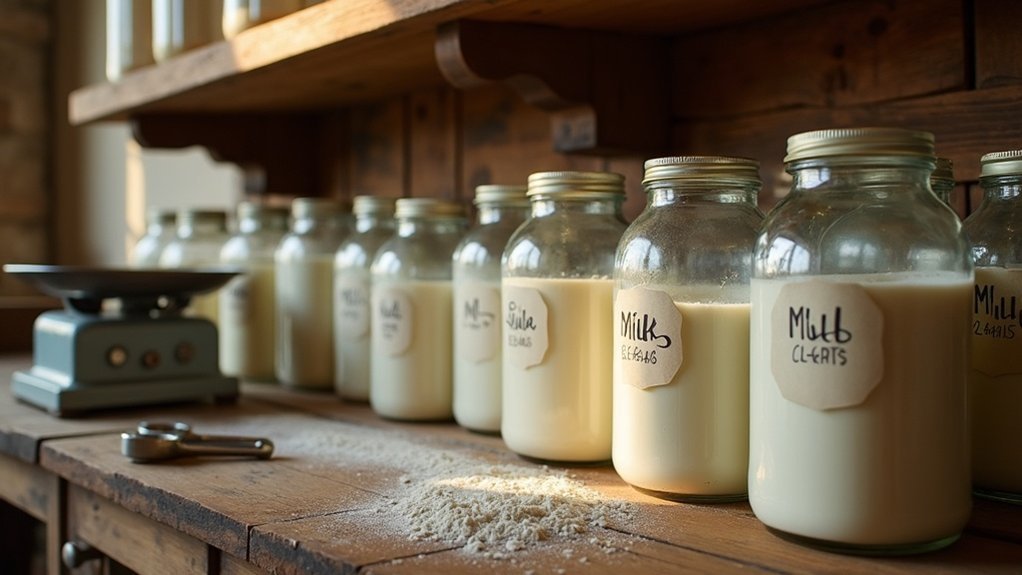
Yes, powdered milk can be stored long-term safely, making it an essential component of any survivalist or prepping strategy. With proper storage in a cool, dry place, unopened packages can last 2 to 10 years beyond their best-by date, providing a reliable source of nutrition during emergencies. For optimal longevity, consider using airtight containers or vacuum-packing to protect against moisture and pests. Freezing powdered milk is also an excellent option, as it allows for indefinite freshness when sealed tightly. Regularly check for spoilage signs, such as off-odors or discoloration, to ensure its quality. By understanding these storage practices, you can be well-prepared for any situation that may arise. Discover more tips to maximize your powdered milk’s shelf life and quality, and enhance your preparedness for the future.
Key Takeaways
- Unopened powdered milk can remain usable for 2 to 10 years beyond the best-by date if stored properly, making it an excellent long-term food storage option for preppers.
- Store powdered milk in a cool, dry location at around 50°F (10°C) to maximize its shelf life and ensure you have a reliable food source during emergencies.
- Use airtight containers or Mylar bags to protect opened powdered milk from moisture and light exposure, critical factors that can compromise food quality in survival situations.
- Freezing powdered milk allows for indefinite freshness, making it a smart choice for long-term storage; just be sure to seal packages tightly to maintain quality.
- Regularly inspect for spoilage indicators like off-odors or discoloration to ensure safety before consumption, as maintaining food safety is essential for effective prepping.
Shelf Life of Powdered Milk
How long can you expect powdered milk to last in your emergency supplies? Generally, powdered milk has a shelf life of 18 months, but unopened packages can remain usable for 2 to 10 years beyond the best-by date, making it a valuable addition to your long-term food storage.
Nonfat powdered milk lasts even longer due to its fat stability, making it a reliable option for your survival pantry.
To ensure the longevity and quality of your powdered milk during long-term storage, follow these proper storage techniques: keep it in a cool, dry place away from light exposure and temperature fluctuations.
Once you open a container, aim to use the powdered milk within three months to maintain its quality. Always be cautious of moisture, as it can spoil the product quickly.
Key signs of spoilage include off-odors and yellow coloration, so be vigilant and discard it if you notice these changes.
Stocking up on powdered milk can provide a crucial source of nutrition during emergencies, so plan accordingly!
Enhancing Shelf Life Through Proper Storage
To enhance the shelf life of powdered milk for survival situations, it’s crucial to implement effective storage practices that address temperature, light, and moisture. Store your milk in a cool, dark place, ideally around 50°F (10°C). When repackaging, opt for airtight containers or Mylar bags with oxygen absorbers to minimize oxidation and extend usability. Here’s a quick reference for best practices to ensure your powdered milk remains a reliable staple in your prepper pantry:
| Storage Practice | Description |
|---|---|
| Temperature | Keep at 50°F (10°C) |
| Original Packaging | Unopened packaging lasts 2-10 years, perfect for long-term storage |
| Airtight Containers | Use for opened powdered milk to maintain freshness |
| Mylar Bags | Effectively blocks moisture and light exposure, crucial for longevity |
| Spoilage Check | Regularly inspect for off-odor or discoloration to ensure quality |
Freezing Powdered Milk for Long-Term Use
Freezing powdered milk is an essential strategy for survivalists and preppers looking to ensure a reliable food supply for the long term. This method allows you to keep powdered milk fresh indefinitely without sacrificing its quality, making it a valuable addition to your emergency food storage.
To maximize its shelf life and maintain its nutritional value, it’s crucial to follow best practices, such as sealing the package tightly and scooping out only what you need for each use.
Additionally, employing techniques like vacuum-packing can significantly enhance your freezing method, protecting your resources from moisture and air exposure, which is key in any preparedness plan.
Benefits of Freezing
While many people overlook the benefits of freezing, it’s a highly effective method for preserving powdered milk long-term, especially for those focused on survivalism and prepping.
Freezing powdered milk keeps it fresh indefinitely and prevents spoilage, making it an excellent option for long-term storage in your emergency supplies. To maintain quality, seal the powdered milk in airtight containers or Mylar bags with oxygen absorbers before freezing, minimizing exposure to moisture and oxygen. This ensures that your food supplies remain viable when you need them most.
You can scoop out the desired amount without thawing the entire package, preventing freezer burn and waste. Plus, there’s no need to bring frozen powdered milk to room temperature; you can reconstitute it directly from the freezer whenever you require it, making it a convenient addition to your preparedness plan.
Best Freezing Practices
When preparing to store powdered milk for the long term in a survival situation, it’s essential to implement the best freezing practices to ensure your supply remains fresh and viable indefinitely.
Follow these steps to maintain the integrity of your powdered milk:
- Only scoop out the necessary amount to avoid thawing the entire batch, preserving your resources.
- Seal the packaging tightly to prevent freezer burn, which can compromise the quality of your food supply.
- Utilize vacuum-packing techniques to extend the shelf life of your powdered milk, ensuring it remains a reliable source of nutrition.
- Regularly inspect for moisture or ice crystals, as these are indicators of compromised packaging that could jeopardize your long-term food storage plan.
Identifying Spoiled Powdered Milk
How can you determine if your powdered milk has gone bad, especially in a survival situation?
Look for signs such as discoloration or clumping, which indicate moisture exposure and potential spoilage. A rancid smell is a clear warning that the powdered milk may have deteriorated, making it unsafe to consume in an emergency.
If the taste has changed or developed an off-flavor, it’s also unsuitable for use. Regular inspections for these signs are crucial when relying on stored food supplies.
If you’re ever uncertain about its safety due to any of these indicators, it’s wise to err on the side of caution and discard the product. Your health and safety in a survival scenario depend on it.
Nutritional Benefits of Powdered Milk
When considering powdered milk as part of your survival and prepping strategy, you’ll find it packed with essential nutrients that are critical for maintaining health during challenging times.
Each serving delivers a robust amount of protein, vital for muscle maintenance, along with essential minerals like calcium that help strengthen your bones.
This makes powdered milk not only a convenient option for long-term food storage but also a valuable addition to your emergency supplies, ensuring you receive key vitamins and minerals even when resources are scarce.
Protein and Amino Acids
Powdered milk is an essential item for survivalists and preppers looking to enhance their protein intake during emergencies or extended periods of self-sufficiency. With approximately 8 grams of protein per serving, it provides a reliable nutritional source comparable to fresh milk, making it a superior choice for long-term storage without sacrificing dietary needs.
Here are some vital points to consider:
- Packed with essential amino acids that promote muscle growth and repair, crucial for maintaining physical strength in survival situations.
- Nonfat powdered milk serves as a low-fat alternative, preserving protein benefits while reducing calorie intake.
- Supports immune health and overall bodily functions, vital for resilience during crises.
- Maintains stable protein content even after long-term storage, ensuring your food supplies remain nutritious and effective.
Essential Vitamins and Minerals
While many people overlook the nutritional benefits of powdered milk, it serves as an excellent source of essential vitamins and minerals that are crucial for maintaining health during emergencies or long-term storage situations.
Nonfat powdered milk provides about 8 grams of protein per serving, supporting muscle growth and repair—vital for those engaged in physical activities or prepping for survival scenarios. It’s also rich in essential minerals, particularly calcium, offering around 300 mg per serving, which is critical for bone health, especially when access to fresh food sources may be limited.
Although some vitamins may diminish after prolonged storage, the caloric content and carbohydrates remain stable, making powdered milk a reliable staple in your survival pantry.
Keep in mind that vitamins A and D are absent in nonfat varieties, so consider adding a supplement to ensure a well-rounded nutritional profile.
Tips for Effective Long-Term Storage
To ensure the longevity and quality of powdered milk for your survival stockpile, it’s crucial to implement effective storage practices.
Implementing effective storage practices is essential for maintaining the longevity and quality of your powdered milk stockpile.
- Store powdered milk in a cool, dry location, ideally at around 50°F (10°C), to help prevent spoilage.
- Utilize airtight containers such as #10 cans or Mylar bags equipped with oxygen absorbers to preserve freshness.
- Protect the nutritional value of powdered milk by keeping it away from light; opt for opaque containers to shield it from harmful exposure.
- When opening packages, repackage the remaining milk in smaller portions for easier use, and conduct regular inspections for any signs of spoilage, including off-odors or discoloration.
These practices will help ensure that your powdered milk remains a reliable resource in your prepping strategy.