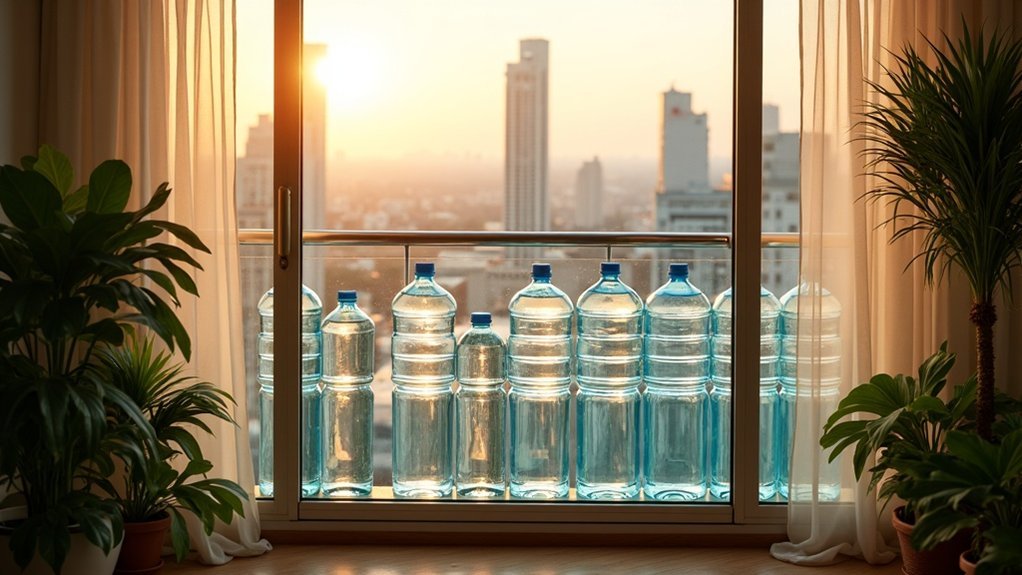
Yes, apartment dwellers can effectively store enough water for emergencies by utilizing innovative storage solutions tailored for survivalists and preppers. Consider stackable containers like WaterBricks or narrow jerry cans that can be easily tucked away in cupboards or under beds. Aim for a minimum of 14 gallons per person to ensure a two-week supply. It’s crucial to regularly check and rotate your water every 6-12 months to maintain freshness and safety. With strategic planning and a mindset geared towards preparedness, you can optimize your space and ensure access to safe drinking water when crisis strikes—there are numerous options available for further exploration.
Key Takeaways
- Apartment dwellers can effectively store ample water supplies by employing stackable containers and innovative storage solutions to make the most of limited space.
- It is essential to have a minimum of 14 gallons of water per person for emergencies and survival situations.
- Compact storage options, such as narrow jerry cans and multifunctional furniture like storage sofas, allow for discreet concealment and effective water storage.
- To ensure the water remains safe for consumption, it is crucial to rotate supplies every 6-12 months, maintaining freshness and quality.
- Utilizing diverse storage locations, including under beds and in closets, can significantly enhance accessibility while optimizing the use of available space for prepping needs.
The Importance of Water Storage for Apartment Dwellers
When it comes to living in an apartment, storing water isn’t just a good idea—it’s essential for your survival during emergencies.
Apartment dwellers should aim for at least 14 gallons of water per person to ensure adequate hydration and sanitation in times of crisis. The American Red Cross recommends one gallon per person per day, which necessitates strategic planning in limited spaces.
Utilizing stackable WaterBricks and diversifying storage locations—such as under beds or in closets—can significantly improve your water storage capabilities.
Regularly checking and rotating your water supply every 6-12 months is crucial for maintaining quality, especially when using food-grade plastic containers.
Prioritize emergency preparedness to ensure you and your loved ones are ready for any situation that may arise.
Innovative Storage Solutions for Limited Space
Finding innovative storage solutions for limited space in your apartment can be crucial for prepping and survivalism, especially when it comes to storing essential water supplies.
Consider stackable water containers like WaterBricks, which hold 3.5 gallons and allow you to maximize your limited space. Storage sofas can discreetly conceal emergency supplies, making them ideal for a preparedness-focused home.
Narrow jerry cans fit perfectly in cupboards, ensuring your water storage remains out of sight yet easily accessible. Canning jars offer a practical alternative, providing additional filtered water storage without taking up much room.
Additionally, collapsible containers are excellent for water storage, easily folding away when not in use, enabling you to adapt your storage solutions as needed.
With these innovative approaches, you can effectively meet your water needs while maintaining a functional living space in the face of potential emergencies.
Recommended Water Storage Quantities
Maximizing your water storage in an apartment is crucial for survival preparedness. Understanding the recommended quantities ensures you’re ready for any emergency situation. Here’s what you need to know:
- 14 gallons per person: This amount is essential to cover drinking, cooking, and sanitation needs for two weeks. Having this reserve is vital in a survival scenario.
- 21 gallons for three weeks: The American Red Cross recommends a minimum of one gallon per person per day, emphasizing the importance of ample water supply during extended emergencies.
- Diverse storage locations: Opt for stackable containers like WaterBricks. These can be conveniently stored under beds, in closets, and behind furniture, maximizing your available space.
Be sure to regularly check and rotate your stored water every 6-12 months to ensure it remains fresh and safe for drinking.
Being proactive in your water storage will enhance your preparedness for unforeseen events.
Practical Container Options for Water Storage
Selecting the appropriate containers for water storage is crucial for effective preparedness in your apartment. Here are some essential options to consider:
| Container Type | Capacity |
|---|---|
| WaterBricks | 3.5 gallons each |
| Blue Can Water | 2.25 gallons per box |
| Narrow Jerry Cans | Varies (compact size) |
| 55-Gallon Drums | 55 gallons |
For urban survivalists, stackable containers like WaterBricks maximize limited space, while food-grade plastic options offer cost-effective storage solutions. For long-term preparedness, consider investing in larger drums, ensuring they are properly treated for safe storage. Store these containers in your emergency kit to meet sanitation and hydration needs during any crisis.
Strategies for Maintaining Water Quality and Freshness
Once you’ve chosen the right containers for your water storage, ensuring that water remains fresh and safe is essential for your survival preparation.
Here are three vital strategies to maintain water quality:
- Rotate Your Stored Water: Change out your stored water every 6-12 months to prevent a stale taste and ensure freshness, keeping your survival stock in optimal condition.
- Inspect Regularly: Regularly check for leaks or signs of contamination in your containers. Make sure they’re intact, properly sealed, and ready for use in emergencies.
- Use Food-Grade Plastic: Store water in tightly sealed, food-grade containers. Avoid glass or previously used containers that may leach harmful chemicals, compromising your water quality.
Additionally, consider adding water treatment solutions to your emergency water supply if it has been sitting for an extended period, ensuring its safety for consumption when needed.