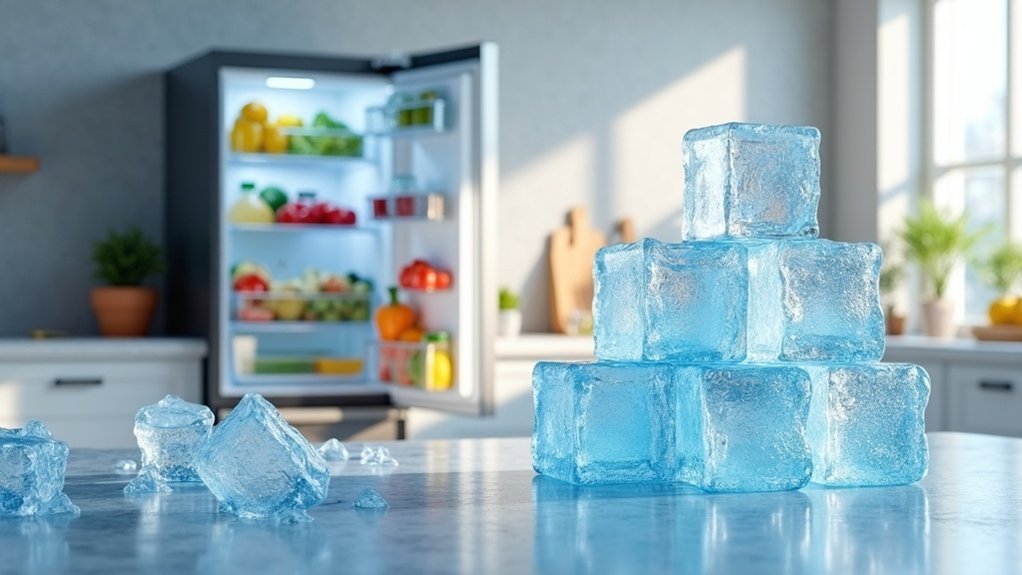
Yes, a fridge can stay cold with ice blocks, making it a useful strategy for survival situations. When ice blocks melt, they absorb heat, which helps lower the internal temperature and preserves food supplies. Larger ice blocks last longer because they melt more slowly, providing extended cooling. To maximize effectiveness, strategically place ice blocks around perishable items and regularly monitor the temperature to ensure it remains below 40°F. Additionally, insulating your fridge can significantly improve cooling efficiency. If you’re interested in more survival techniques for optimizing your fridge’s cooling capabilities or exploring alternative methods for food preservation, feel free to reach out!
Key Takeaways
- Ice blocks are a vital resource in survival situations, as they absorb heat while melting, effectively keeping your fridge cold during power outages.
- Opt for larger ice blocks instead of smaller cubes, as they provide extended cooling capabilities, which is crucial for preserving food supplies.
- Enhance the effectiveness of your ice blocks by ensuring proper insulation and sealing any gaps in the fridge, maximizing your chances of maintaining a safe temperature.
- Regularly monitor the fridge temperature to ensure it remains below 40°F, which is essential for food safety and preventing spoilage during emergencies.
- Consider using frozen water bottles as ice blocks; they not only keep your fridge cool but also provide a source of drinkable water when needed, making them a dual-purpose survival tool.
Understanding the Cooling Effect of Ice Blocks
When you place ice blocks in your refrigerator, they serve as a critical resource for heat absorption as they melt, which is vital for preserving food during power outages or emergencies.
This heat transfer process occurs as ice transitions from solid to liquid, pulling warmth from the surrounding air and keeping the internal temperature lower.
Larger ice blocks are particularly advantageous, as they provide extended cooling capabilities compared to smaller cubes due to their slower melting rate.
To enhance cooling efficiency in survival situations, position ice blocks strategically within the fridge, ideally at the top or center.
Additionally, it’s important to regularly monitor the internal temperature with a reliable thermometer, ensuring it remains at or below 40°F to safeguard food safety in any prepping scenario.
How to Properly Use Ice Blocks in Your Fridge
To effectively utilize ice blocks in your fridge for survival situations, select high-quality blocks that freeze rapidly and sustain low temperatures for extended periods.
Arrange these blocks strategically around perishable food items to optimize cooling efficiency and minimize spoilage, which is crucial during emergencies.
Regularly monitor the fridge temperature to ensure optimal performance while using ice blocks, as maintaining proper conditions can be vital for food preservation in a survival scenario.
Best Ice Block Types
Using the right type of ice block can greatly enhance your fridge’s cooling efficiency, which is crucial for survival situations where preserving food is essential. Distilled water blocks freeze faster and clearer, maximizing cooling and ensuring your food stays fresh longer. You can create homemade ice blocks in various sizes, tailoring them to your fridge’s space or your emergency supplies. Larger ice blocks last longer than smaller cubes, providing prolonged cooling as they melt slowly, making them ideal for extended use in a survival scenario. Insulating ice blocks with towels further reduces heat transfer, helping to keep your perishables safe.
| Ice Block Type | Advantages | Usage Tips |
|---|---|---|
| Distilled Water | Freezes faster, fewer impurities | Best for efficiency in food preservation |
| Homemade Blocks | Customizable sizes | Fill durable containers to suit your needs |
| Larger Blocks | Longer-lasting | Ideal for extended use in emergencies |
| Insulated Blocks | Reduced heat transfer | Wrap with towels to maximize cooling efficiency |
Placement for Maximum Efficiency
Placing ice blocks strategically in your fridge can significantly boost your cooling efficiency, a critical aspect of survival preparedness. Position them on the top shelf, as cold air sinks, allowing cooler air to circulate downward throughout the fridge.
Grouping ice blocks together increases the cold surface area, helping to maintain lower temperatures for extended periods while minimizing air circulation. For added versatility, consider using frozen water bottles as ice blocks; they not only cool effectively but also provide drinkable water once melted—a valuable resource in emergency situations.
Keep the refrigerator door closed as much as possible to retain the cold air, preserving your food supplies. Lastly, monitor the internal temperature with an appliance thermometer, ensuring it stays at or below 40°F for optimal food safety while utilizing ice blocks for cooling.
This knowledge is essential for anyone serious about survivalism and prepping.
Importance of Insulation for Maximum Efficiency
To maximize the efficiency of your fridge when using ice blocks in a survival situation, it’s crucial to assess the insulating materials you have at your disposal.
Properly sealing any gaps is essential for retaining the cold air generated, while strategically placing insulation layers can significantly enhance performance.
Each of these factors is vital for maintaining the desired low temperatures inside your fridge, ensuring that your food and supplies remain preserved during emergencies.
Types of Insulating Materials
Insulation is a vital component in enhancing the efficiency of refrigeration systems, especially when relying on ice blocks for cooling in survival situations. The selection of appropriate insulating materials can significantly reduce heat transfer, thereby maintaining lower temperatures effectively in emergency scenarios.
| Insulating Material | Benefits | Usage |
|---|---|---|
| Straw | Eco-friendly, cost-effective | Layering for insulation |
| Sawdust | Reduces heat transfer | Combined with ice blocks |
| Foam | High thermal resistance | Ideal for fridge lining |
Utilizing a strategic combination of these materials not only extends the cooling effects of ice but also conserves energy, making your refrigeration system more resilient and efficient during power outages or in off-grid living situations.
Sealing Cold Air
Effective insulation is crucial for survivalists looking to keep cold air contained within their refrigeration systems, especially when utilizing ice blocks for cooling. By sealing any gaps, you ensure that cold air remains inside, which is vital for preserving food and supplies in emergency situations.
Employing thermal blankets or foam can significantly reduce heat transfer, while reflective blankets can enhance insulation by deflecting heat away from your food storage. It’s also important to keep the fridge door closed as much as possible to prevent warm air from entering.
Additionally, using cooler bags around the fridge can help retain cold air longer, maximizing the efficiency of the ice blocks you rely on in your prepping strategy.
Insulation Layer Placement
When you strategically place an insulation layer around your fridge, you significantly boost its cooling efficiency, particularly when depending on ice blocks for food preservation.
This layer is crucial for maintaining a low internal temperature, which in turn helps your ice blocks to last longer during emergencies. Here are three key benefits to consider:
- Minimizes heat transfer, ensuring your fridge remains cold even during power outages—a vital aspect of preparedness.
- Slows down the melting of ice blocks, thereby extending their cooling capacity and preserving your perishable supplies.
- Seals gaps effectively to prevent cold air from escaping, maximizing your energy use and resources.
Using reflective materials like aluminum foil can further enhance efficiency, ensuring your food stays safe and fresh for as long as possible.
Prioritizing insulation is essential for optimal performance in any survival situation.
Alternative Cooling Methods During Power Outages
During power outages, maintaining the cold temperature of your fridge is crucial for preserving perishable food items, especially for those who prioritize survivalism and prepping.
Ice blocks are a practical solution for this situation, as they absorb heat and act as a reliable temporary coolant. Unlike loose ice cubes, ice blocks last significantly longer and provide a more stable cooling effect, making them an essential addition to your preparedness plan.
To maximize your efficiency, it’s wise to pre-freeze water in durable containers to create ice blocks well before an anticipated outage. For extended outages, strategically placing multiple ice blocks around your perishable items can help sustain the fridge’s temperature for several hours.
Additionally, keeping the fridge door closed and adding insulation can further enhance your cooling efforts, ensuring that your food supplies remain safe and viable during critical times.
Preparing in advance can make all the difference when it comes to survival.
Monitoring Temperature for Food Safety
Maintaining the safety of your food is crucial in survival situations, and using ice blocks to keep your fridge cold can be an effective strategy. Here’s how to ensure food safety through effective temperature monitoring:
- Utilize an appliance thermometer to confirm that your fridge remains at or below 40°F, which is essential for food preservation.
- Regularly examine your food for signs of spoilage, such as off odors or altered textures, to avoid consuming unsafe items.
- Keep the fridge door closed as much as possible to retain cold air and enhance the effectiveness of your ice blocks, ensuring your supplies last longer in a survival scenario.
Choosing the Right Type of Ice for Cooling
How can you choose the best type of ice for cooling your fridge effectively during emergencies?
Opt for ice blocks over loose ice cubes, as their larger mass ensures a slower melting rate, providing prolonged cooling during power outages or crisis situations.
Choose ice blocks instead of loose ice cubes for extended cooling during power outages, thanks to their slower melting rate.
Pre-frozen ice blocks are particularly useful as they help maintain a lower temperature by minimizing air circulation when tightly packed.
For an even colder option, consider using dry ice, but handle it with extreme caution to prevent frostbite; avoid direct contact with perishable items.
You can also prepare for emergencies by making homemade ice blocks—simply freeze water in large containers and place them at the bottom of the fridge for maximum cooling efficiency.
This preparation can be crucial for preserving food and resources when traditional power sources are unavailable.
Long-Term Solutions for Maintaining Cold Storage
Ice blocks can be a temporary fix for cooling your fridge during emergencies, but for serious survivalists, long-term strategies are critical for effective cold storage.
Here are three essential methods to consider:
- Utilize Dry Ice: Opt for dry ice instead of regular frozen water for a more efficient cooling solution. Its sublimation at a chilling -78.5°F provides prolonged cold without introducing moisture, making it ideal for long-term storage.
- Pre-cool Your Appliances: Before any anticipated outages, pre-cool your fridge and freezer. This proactive step creates an extra layer of insulation, enhancing the efficiency of your ice blocks and prolonging the cooling effect.
- Monitor Temperatures Regularly: Equip your fridge with an appliance thermometer to consistently monitor internal temperatures. Keeping your fridge at or below 40°F is crucial to prevent foodborne illnesses, ensuring that your supplies remain safe and viable during emergencies.